
 TV & Film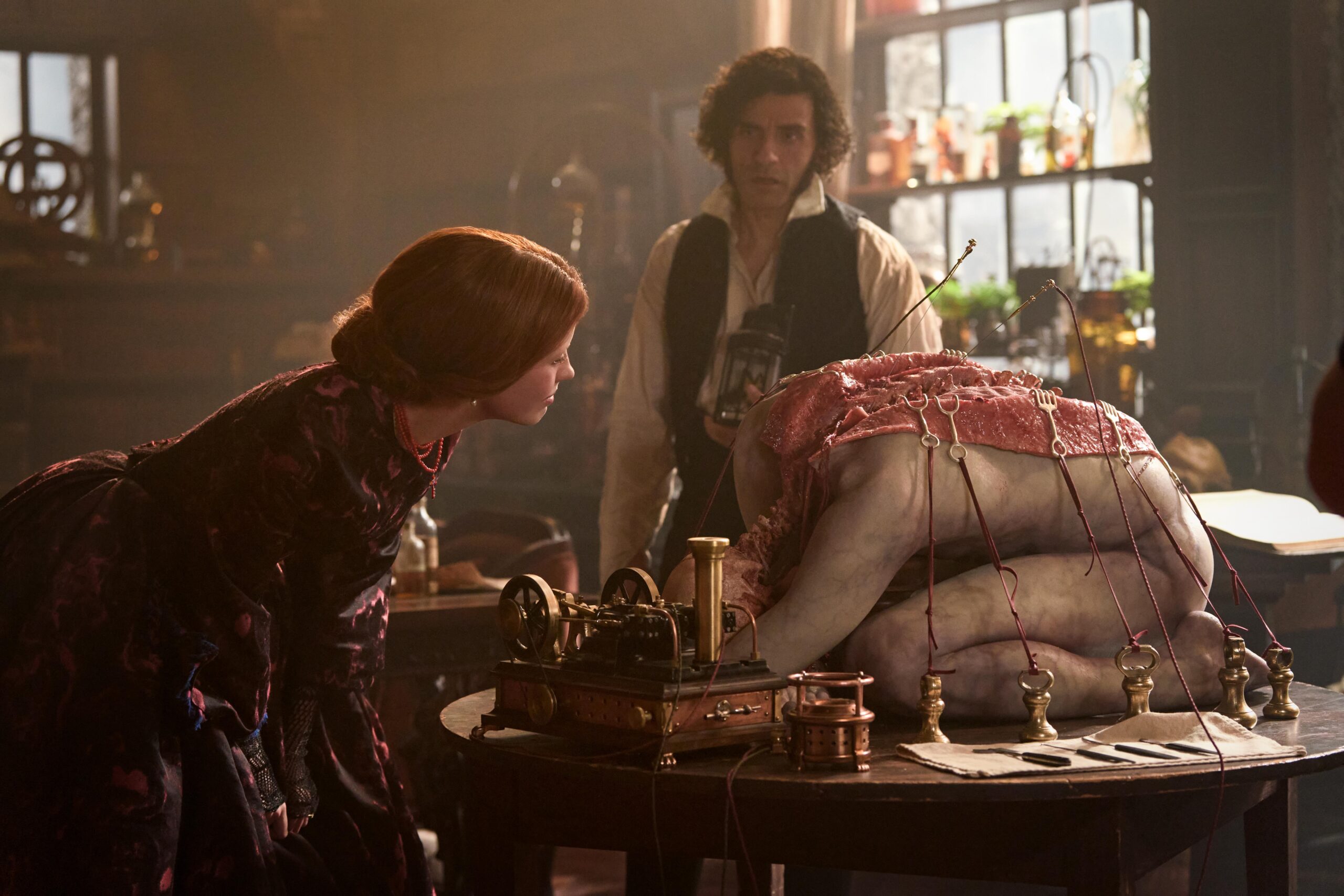
MYTH, MONSTERS, and love are Guillermo del Toro’s bread and butter. He loves grotesque beings so wholeheartedly that he can’t help sanding down their sharpest edges, polishing their wounds until they gleam with reflected humanity.
In Frankenstein (2025), his long-gestating adaptation of Mary Shelley’s original text, that generosity becomes both the film’s animating force and its fatal flaw. Indeed, the famed creature rises, the dead live, and the snow glows a mournful blue. But somewhere in the resurrection—between a bruised rendition of the Creature and the immaculate hand-stitched world around him—Mary Shelley quietly disappears.
What’s left is a Frankenstein born no longer from the body, but from the heart—a story of loneliness rather than Shelley’s tale of creation’s violence.
A maker without a mother
Despite two centuries of pop-cultural reduction, Shelley’s novel is not simply the story of a man who builds a monster. It is a grief-struck exorcism of birth and death, written by a teenage girl who lost her mother to childbirth, nearly died giving birth herself, and then watched most of her children die in infancy. For her, Frankenstein was not just a metaphor for creation—it was an indictment of the violence of creation and the brutal intimacy of motherhood. Birth was death, and to make life was to risk undoing your own.
Evidently, del Toro adores this story too much to leave it in Shelley’s body. His adaptation follows Victor Frankenstein (Oscar Isaac), a brilliant but spiritually hollow scientist whose drive to conjure life births the Creature (Jacob Elordi), a being stitched together from corpses. In his creation, what begins as an act of ambition unravels into a collision of abandonment, longing, and revenge.
This latest adaptation is spiritual rather than existential, tender rather than maternal. It reorients the emotional axis away from Shelley’s fear of creation toward a more familiar del Toro register: a father-child melodrama and a tragedy of abandonment instead of birth. Victor is rendered not as a hubristic ideologist but as a gothic deadbeat—a monster in velvet. This version is clean, legible, and dramatically forceful, but it evacuates the novel’s moral labyrinth. Instead of two beings locked in recursive self-destruction, we get a straightforward villain and a victim.
In simplifying that loop, the film loses the terror that Shelley understood: that the maker and the made are inseparable and are mutually damned. This shift from maternal terror to del Toro’s parental abandonment undermines the narrative, depriving the audience of the emotional experience the original novel offers. While the film was never advertised as a one-to-one adaptation, the lack of moral discomfort in it stands out.
A world carved in frost and sorrow
Despite these divisive narrative changes, the production itself is cathedral-level exquisite. Dan Laustsen’s camera roams torch-lit stone halls and alchemical laboratories like a curious ghost, devouring textures of bone, wax, and frost. The winter night looks more alive than the people stumbling through it. This is del Toro at his most sumptuous state, summoning a world so tactile that it feels grander than its ideas.
At the film’s broken heart is Elordi, whose Creature moves like someone permanently two seconds away from remembering he died. His body is hulking, trembling, and achingly delicate—a man stitched from grief. Elordi plays him not as a tragic philosopher or vengeful demon, but as a child bewildered by punishment. Even if the script declaws him, Elordi effectively captures the Creature’s violence as mournful, apologetic, and nearly saintly.
Opposite him, Isaac crafts Victor as a man whose brilliance curdled into rot. He delivers a strong performance—icy and magnetic, though strikingly inert whenever Mia Goth enters the frame. Goth, playing both the maternal Claire Frankenstein and his younger brother’s fiancée Elizabeth, is seemingly stranded on the film’s emotional periphery.
She tries, with practiced devotion, to bind Victor to something human, but their chemistry is hollow even when his affection grows. Isaac’s past works show that he can conjure intimacy at a whim, but with Goth, he barely sparks. Their relationship becomes symbolic shorthand—an apparatus for del Toro to signal the audience, rather than additional substance, leaving a part of the film’s emotional core feeling oddly vacant.
What is created and what is taken
The relationship among the film’s characters only emphasizes its thematic substitutions. In the novel, Shelley built a Möbius strip of culpability, parent and child consuming each other in mirrored violence. However, del Toro rewrites that into a straight line: Victor is cruel, the Creature suffers. This retelling mourns the loneliness of the created rather than the terror of creating.
This switch-up culminates in the film’s final gesture, which quotes Lord Byron’s “And thus the heart will break, yet brokenly live on.” This could be viewed as a beautiful and perhaps fitting choice, since Byron was the one who challenged Shelley to write a horror story that later on gave birth to Frankenstein. However, the decision not to use Shelley’s own words also underscores how often her voice has been framed, contextualized, or overshadowed by the men around her.
Across its three chapters, del Toro’s take motions toward grief, guilt, and the consequences of creation, shying away from the raw, bodily terror Shelley placed at the center of her tale. Shelley’s horror was not abstracted or spiritual; it was physical, intimate, and shaped by the pain she had personally endured. Her Creature was not solely a metaphor for cosmic loneliness, but a confrontation with the violence of birth, the instability of identity, and the relentless cost of creation when imposed on a woman’s body.
By recasting the novel’s origins as a story of paternal abandonment, the film soothes out that jagged history. It offers compassion where Shelley offered accusation, melancholy where she delivered prosecution. What remains is moving, but gentler—too gentle for the monster it set out to resurrect.
There is much to admire here: a monster unforgettable in his tenderness, images carved from dream-marble, a world worth wandering. But the body at the story’s center—the fragile, furious girl writing her grief into a nightmare—has been excised.
It lives, but it is not hers.