
 Food
Food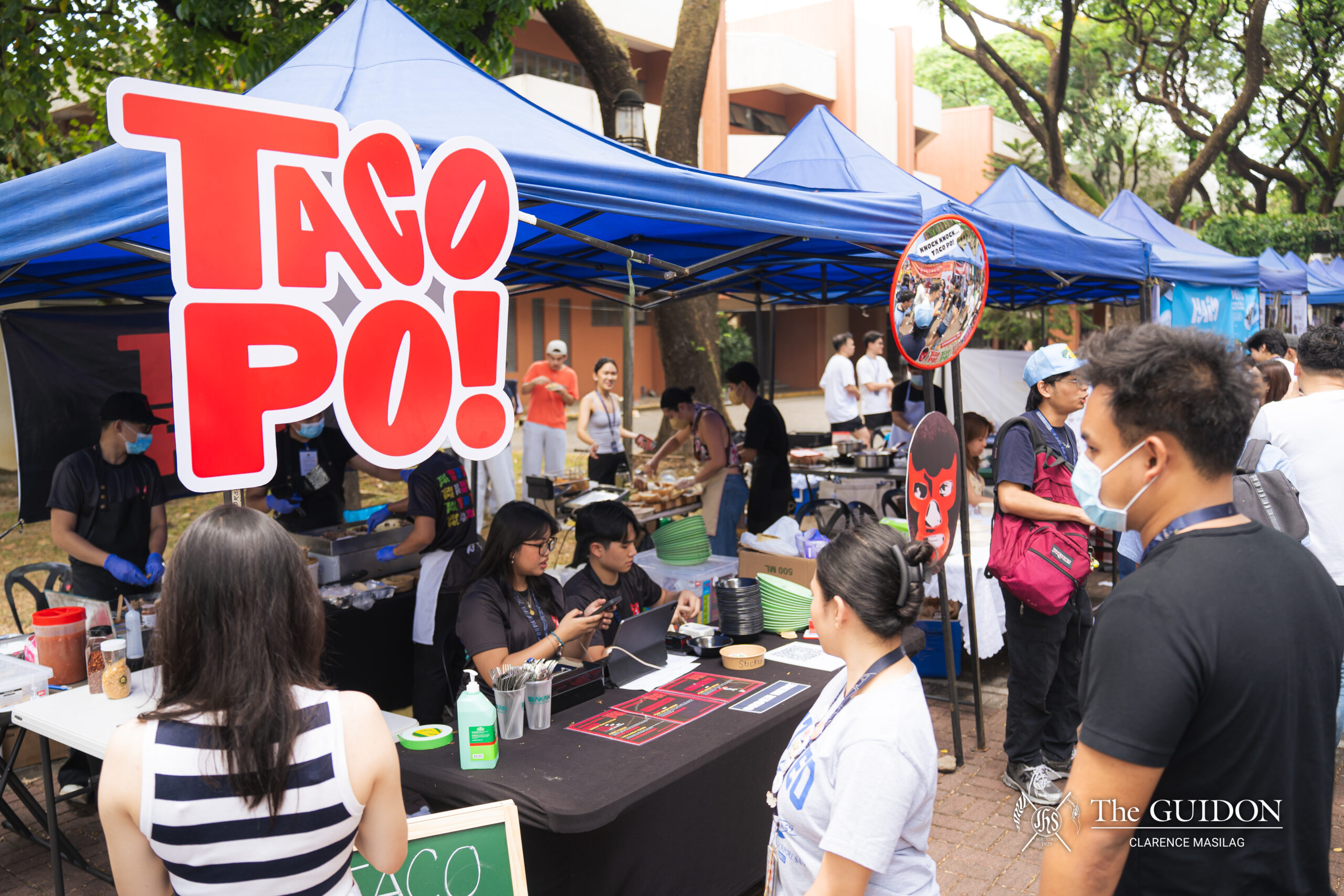
EVERY YEAR, the JGSOM Student Enterprise Center (JSEC) Challenge puts student-run food stalls to the test, with judges evaluating creativity and flavor under the pressure of the kitchen and the crowd. This year, eight competitors are vying for the top spot—each boasting unique menus from various cuisines.
In this round of the JSEC Challenge Roundup, Vantage Magazine digs into Filipino cuisine at its most creative, where familiar flavors get a modern twist. Read on to see which dishes deliver, which ones surprise, and which meals are worth your bite.
Achi
There is no need for picking sides, especially when it comes to food! Achi echoes this statement, as it satiates cravings for two cuisines at once with a lineup that blends Filipino staples and Chinese-inspired dishes.
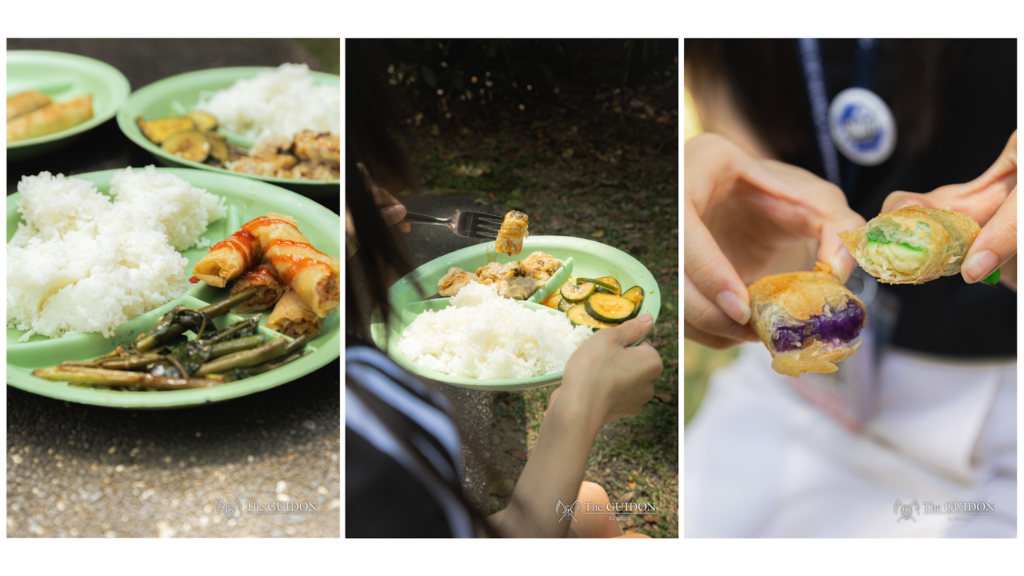
Their Lumpia ni Achi w/ Garlic Kangkong (Php 135) carries a taste of homemade comfort with every bite. The lumpia’s shell yields to teeth with a satisfying crunch, serving as a jacket to a well-seasoned mix of ground pork and vegetables. This is further enhanced by a sweet and sour sauce drizzled across the lumpia’s golden-brown exterior. The synergy of the dish’s features is pleasant, more so when accompanied by strings of crisp kangkong, coated in a light garlic-infused sauce.
Unfortunately, the same praise cannot be extended to the Achi-lly Pork Wontons w/ Sichuan Cucumber Salad (Php 160). While the wontons do not skimp on the meat filling, they are wrapped more thickly than necessary, making them difficult to cut without coming undone. A heap of chili oil glosses the exterior, prompting warmth to explode in your mouth while reducing the pork into a bland afterthought. Achi’s cucumber side, which fails to cleanse the palate, garners a similar observation as the pork filling: excessive spice dulls the vegetable’s refreshing quality.
Of course, no meal is complete without dessert. The Acheese Tikoy (Php 50) comes in both ube and pandan flavors. However, appealed customers might be disappointed to find that the nuances between the two are subtle. The processed cheese overpowers most traces of nutty sweetness in both the yam- and plant-based variations. Still, the tikoy redeems itself through its texture: chewy and not tough on the mouth, even after being fried.
Overall, Achi’s menu was curated with the intention of honoring both Filipino and Chinese tastes. The lumpia has managed to fulfill this, but the other dishes need a better balance of flavors to satisfy one’s Filipino-Chinese cuisine cravings.
2.5/5 🥟🥟/🥟🥟🥟🥟🥟
Haín
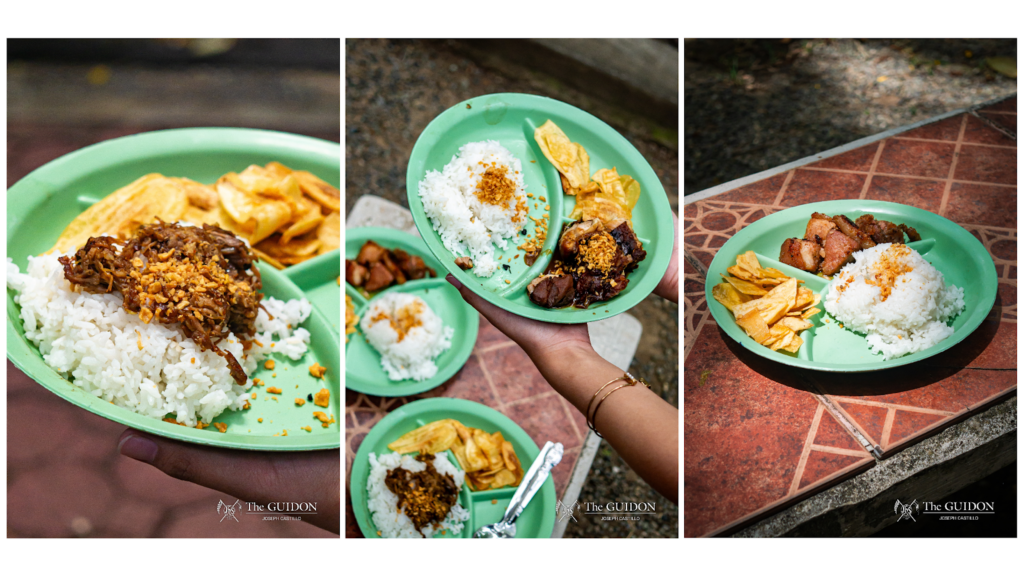
Plating an answer to the age-old lunch dilemma: “Hain ta mokaon?” (Where do we eat?), Haín serves home-style Filipino comfort food. Their generous portions and familiar flavors promise a quick, hearty meal, though not every dish fully lives up to that expectation.
The Braised Beef Pastil (Php 160) comes in dark shreds over rice with a light sheen of oil. The beef is mild and uneven, as some bites hint at that slow-braised depth, while others taste noticeably flat. If anything, the oil does most of the work to soften the meat, instead of enhancing its flavor. For a dish that typically encourages you to balance each bite with more rice, the filling here feels underwhelming, leaving the grains to carry the plate.
By comparison, the Humba Glazed Fried Chicken (Php 130) fares better. Thickly coated in a dark glaze, the chicken first hits with sweetness, then settles into a salty, savory finish with a whisper of smokiness that borders on bitterness. The meat is tender and soft, though the exterior lacks the crunch described in the menu.
Meanwhile, the Crispy Pork Adobong Puti (Php 140) is the weakest of the three. The pork pieces look promising but have a texture that is neither tender nor crisp, and the flavor remains fairly plain, falling short of the crunchy bites and tangy flavors the menu advertises. The suka (vinegar) on the side brightens each bite with needed acidity, but it still fails to bring out the depth and character expected from the dish.
Across all meals, the garlic rice acts as a comforting base with a mild and subtle flavor, while the banana chips contribute a thin, crisp sweetness that gives a light yet effective contrast to the savory dishes. For what it’s worth, Haín delivers a hearty Filipino bite through its generous portions and nostalgic familiarity. Though some dishes do not fully deliver the crispness and flavor the menu promises, greater consistency and careful attention to texture would help the concept fully deliver.
3/5 🍛🍛🍛/🍛🍛🍛🍛🍛
Taco Po!
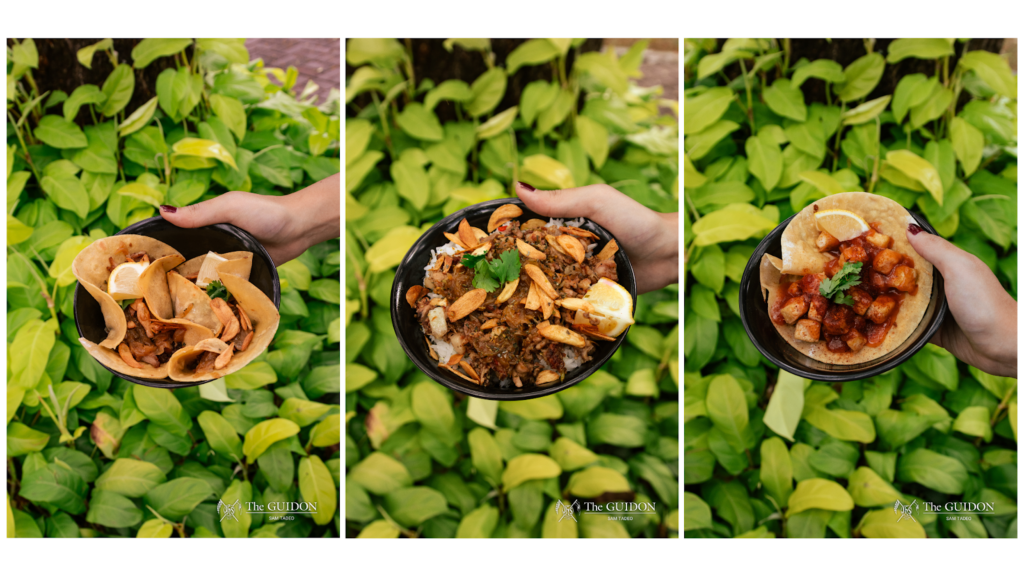
Seeking a fusion of comforting and adventurous flavors? Taco Po! arrives at Red Brick Road with their signature soft tacos and rice bowls that create a unique, savory experience for Ateneans seeking familiar Filipino flavors in Mexican dishes.
One popular Mexican dish is birria, known for the rich, flavorful consommé that helps create that tender and juicy meat you look for in a good taco. Taco Po!’s rendition of this comes in their Pork Adobo Birria taco (Php 180), which was oddly dry despite being coated in oil. It was also combined with a stale and rather tough tortilla, giving the taco an overall confusing texture. Nonetheless, the toppings—a hint of cilantro and a squeeze of lemon—refresh the taste buds by adding a wonderfully zesty note that contrasts well with the dish’s umami flavors.
Similarly, the Pork Fuego in taco bowl format (Php 175) had a similar construction to the birria. The meat was dry, but saved by the soft, sweet caramelized onions that topped it. Accompanied by crispy garlic chips and a pillow of fluffy white rice, the meal was pleasant but had nothing particularly remarkable. Because the dish was missing its tortilla chips and its supposed chili kick, it ultimately needed more substance.
For a vegetarian option, the Chili Garlic Tokwa taco (Php 95) was a flavorful surprise with its generous serving of a sweet, tangy sauce, further emboldened by a drizzle of lemon juice and herbs. While delicious, its taste was completely devoid of its “chili garlic” description. Its tortilla had the same problem of being tough, and there was no element to take away from the texturally soft tofu, which made for an unsatisfying mouthfeel altogether.
Unfortunately, Taco Po! fails to deliver on their promise of blending cuisines. A simplified menu would have possibly helped with execution if they had narrowed their focus to the flavors. Despite that, the garnishes were both enjoyable and memorable, showing that Taco Po! does have potential for truly tasty bites.
2.5/5 🌮🌮/🌮🌮🌮🌮🌮