
 TV & Film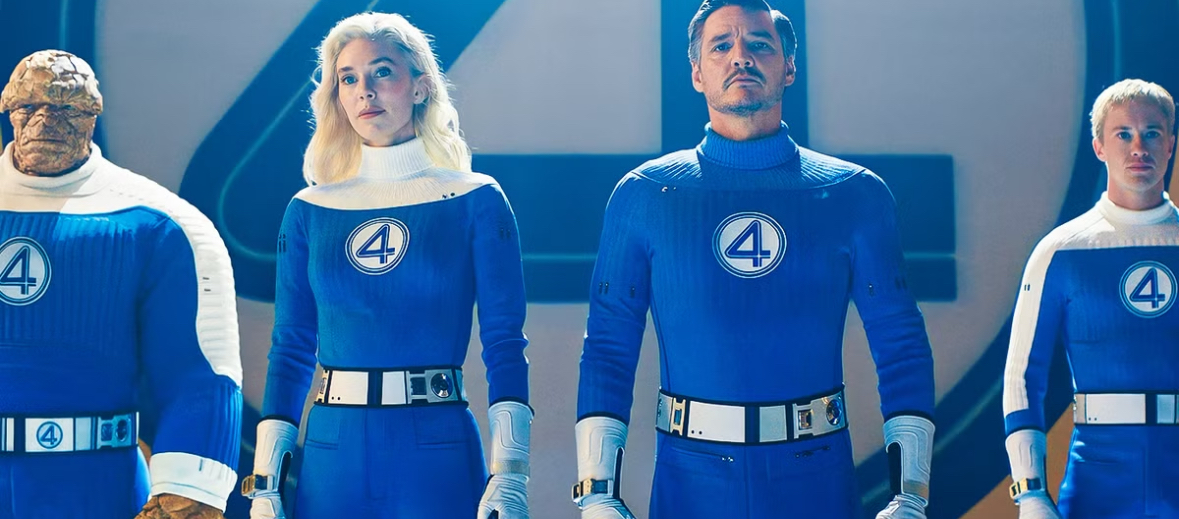
ONE QUIET evening, a family home is filled with rare peace. Then, a serendipitous discovery occurs: a couple learns they will finally be parents. By foregoing the typical cold open of ominous disasters or messy brawls, Matt Shakman’s The Fantastic Four: First Steps (2025) proves that the movie is first and foremost a story about family.
Reed Richards (Pedro Pascal), his wife Sue Storm (Vanessa Kirby), her younger brother Johnny Storm (Joseph Quinn), and their best friend Ben Grimm (Ebon Moss-Bachrach) welcome the birth of Franklin Storm Richards (Ada Scott) on shaky ground. When the Silver Surfer (Julia Garner) heralds Earth’s imminent destruction, the Fantastic Four must find a way to save the world from the hands of Galactus (Ralph Ineson)—without sacrificing Reed and Sue’s son in the process.
With solid writing, blockbuster stakes, and gripping action sequences, Shakman’s direction brings Josh Friedman and Eric Pearson’s screenplay to life through this beloved installment in Phase Six of the Marvel Cinematic Universe (MCU).
Meeting Marvel’s first family
As the fourth on-screen iteration of the Fantastic Four, First Steps drops the viewer in the middle of the characters’ journeys, swiftly breezing through the exposition. It expects that audiences are already familiar with their origin story—four astronauts who were launched into space acquire powers from cosmic radiation and learn to use their abilities for the greater good.
Pascal portrays Reed with candid emotion, unlike other adaptations of Mr. Fantastic, wherein neither the audience nor characters understand what’s going on in the brain of the. As a master at conveying emotion, Pascal says everything with his eyes. However, his performance tends to dilute Reed’s canonical tendency to favor the head over the heart. In contrast to Pascal’s softer characterization of Reed, Kirby portrays Sue, a new mother and the headstrong Invisible Woman, as a force to be reckoned with. In this long-overdue adaptation, Sue is finally recognized as the team’s most powerful member, packing the most brute strength in both her combat and everyday life. With her tendency of superpowered outbursts, she expresses anger in a way that is often relegated to male characters—raw, aggressive, and unapologetic.
Johnny, explosive in both personality and powers as the Human Torch, is a well-known mischief-maker in canon. For once, the film decenters his playboy persona and presents him in a more nuanced, mature light. While his trademark wit and flirty charm still shine through, this persona is not all that he is—Quinn’s Johnny proves to be highly intelligent, dryly funny, and selflessly loving. Inseparable from Johnny is Ben, who is portrayed by Moss-Bachrach as a gentle giant beloved by children and the general public despite his rocky appearance. This adaptation is the first to touch on Ben’s Jewish roots, grounding him in humanity rather than focusing on his otherness as The Thing, as most adaptations tend to do that instead. However, he remains underutilized in the story, receiving far less development than his co-protagonists and barely experiencing any character arc at all.
As an ensemble, the Fantastic Four’s chemistry makes their family dynamic as believable as it is entertaining. Shakman and the cast provide novel representations of these characters, yet the film invests little screen time in developing them. For instance, the characters’ internal conflicts are quickly resolved in favor of shifting the spotlight towards their battle against Galactus. This rapid turn of events entertains the audience, but detracts from the story’s self-proclaimed core—family. Despite possessing the perfect premise to build on this theme like a sucker-punch, the film’s emotional impact underwhelms due to the narrative’s heavier emphasis on action rather than character arcs.
Reviving familiar foes
With the heart of its heroes firmly in place, the film grounds them in a world as bold and vibrant as they are. Blending a ‘60s aesthetic into a futuristic society, Jille Azis’ Earth 828 set design bursts with whimsy alongside Michael Giacchino’s swingingly expressive score, which ranges from swelling fanfare to jaunty woodwinds. In a world this vivid, however, the threats that emerge are just as striking. Shakman is able to craft a stunning home for the superpowered family while also harboring villains that are just as formidable.
The film presents its antagonists with layered complexity. As the voice of Galactus, Ineson rumbles with an ancient exhaustion that matches the character’s sluggish movements. He acts weary of his own age and too powerful to be threatened, proving that he does not have to be aggressive to be sinister. Yet, despite his power, remnants of his humanity linger when the film hints at a tragic past behind his hunger.
The film reimagines the anti-hero Silver Surfer—originally Norrin Radd in the comics and subsequent adaptations—as Shalla-Bal, a former scientist who now locates Galactus’ next victims to spare her own world from him. While the Surfer is traditionally a male character, the decision to cast a woman is not just gender-bending for its own sake. In the comics, Shalla-Bal is Norrin’s lover, left behind on their home planet, Zenn-La, after Norrin volunteered as Galactus’ herald. In true MCU fashion, this adaptation asks, “What if Shalla-Bal was the Silver Surfer instead?” Garner’s portrayal balances alien mystique with human grief in guarded layers. Alongside Quinn, she delivers one of the film’s most striking moments, wherein Johnny confronts Shalla-Bal with ghosts from her past, momentarily exposing the Surfer’s emotional vulnerability.
First Steps departs from usual MCU antics by existing within its own standalone Earth, defying expectations that it would set up the upcoming megaproject, Avengers: Doomsday (2026). Marvel Studios has teased Dr. Doom, the Fantastic Four’s archenemy, as the next big bad; yet, the film sidesteps any mention of Dr. Doom in its narrative. Not only is his role completely erased in the family’s origin story, but eagle-eyed fans will catch that Doom’s absence in the main arc is intentional, and perhaps even ominous.
Nothing short of fantastic
With its ensemble of lovable heroes and daunting enemies, First Steps is a fun, feel-good blockbuster that satiates your superhero cravings. Complementing emotional repercussions with thrilling fight choreographies and special effects, the final battle between the Fantastic Four and Galactus culminates themes of sacrifice, redemption, and the raw strength of a family’s love. While its emotional impact won’t draw tears, its punchy pacing and easy humor will have you leaving the theaters with a grin that’s all but invisible.