
 Hype
Hype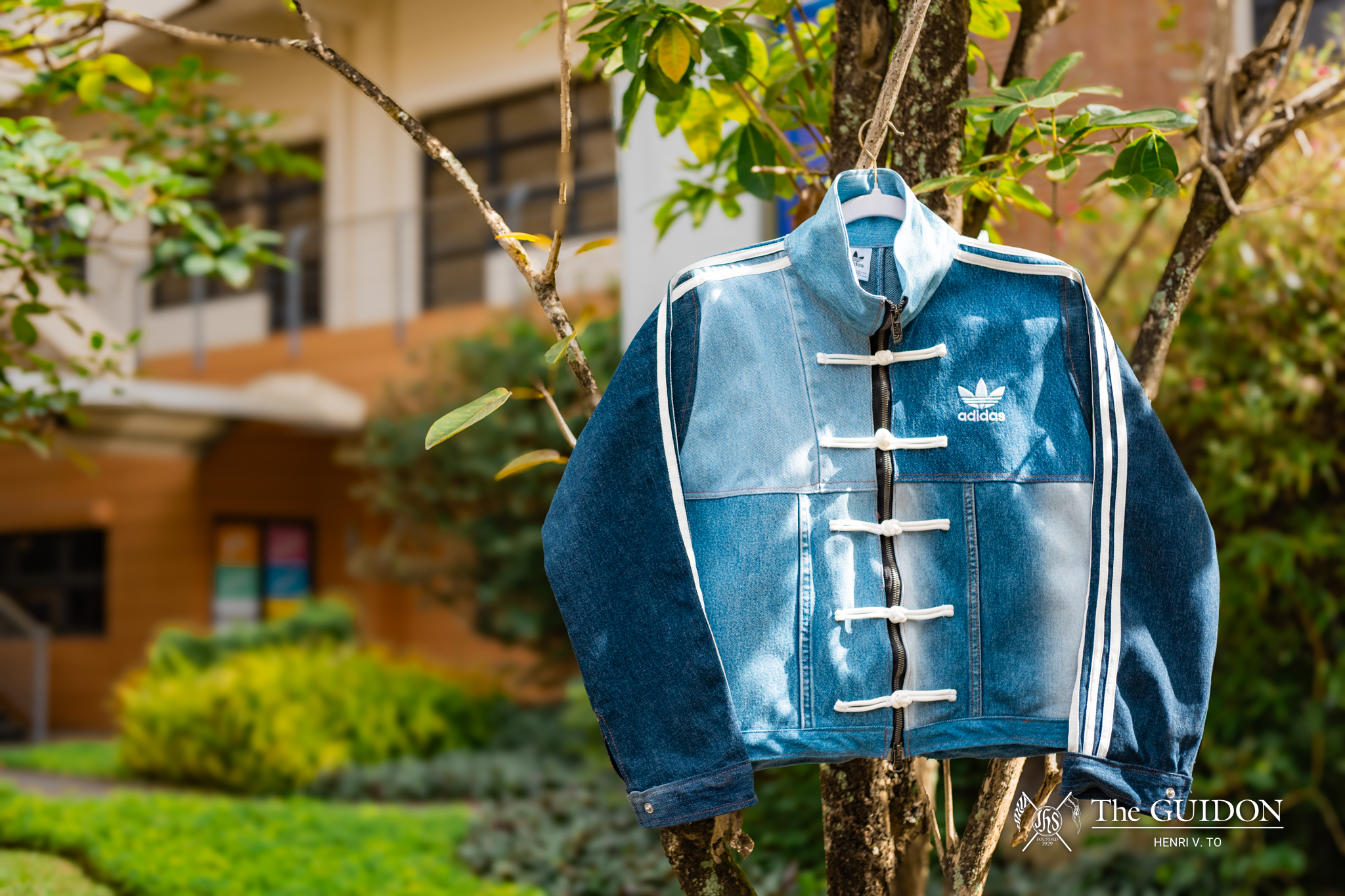
CAMPUS FASHION has a way of keeping its own calendar. Even without announcements or reminders, clothing begins to register certain moments before they are named. As the Ateneo community celebrates Chinese New Year, fashion becomes one of the subtler ways that the student body participates in the occasion.
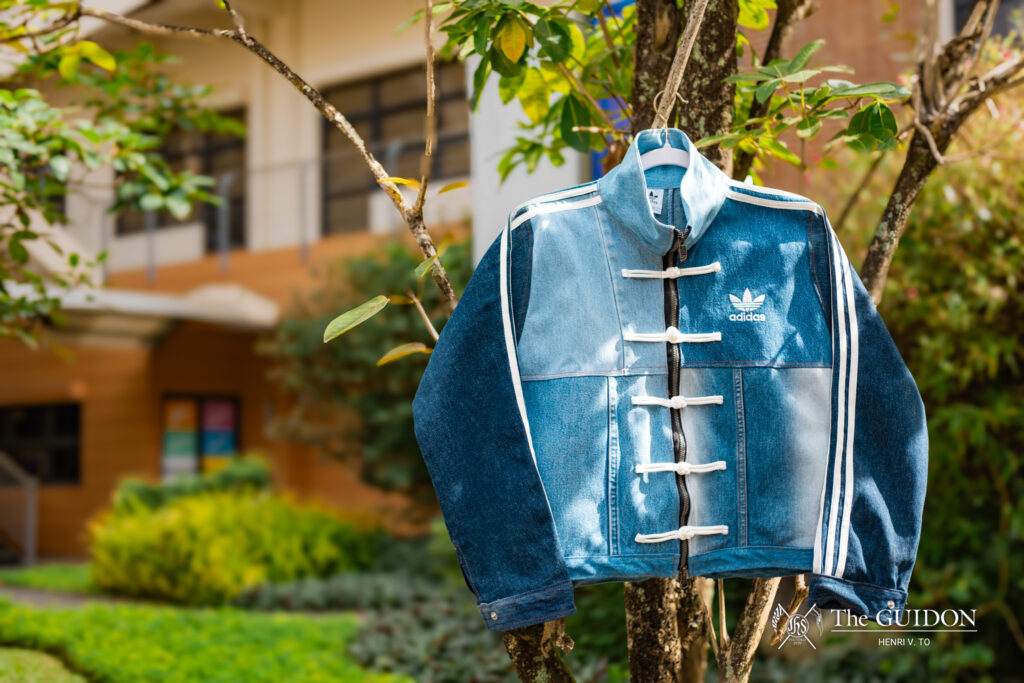
Within the peripheral vision of celebration and festivity, certain patterns are restitched: one of the most visible is the Tang-inspired Adidas jacket. Drawing from traditional Chinese silhouettes through frog-button closures and structured collars, the jacket moves easily between cultural events and everyday life. Its appeal lies in the ability to signal cultural affiliation without sacrificing contemporary relevance. Through this circulation, campus styles emerge as a subtle but persistent site of heritage-based expression.
The fabric of belonging
Expounding on the circulation of the Tang-inspired Adidas jacket, Chinese Arts and Society Professor Aaron Joseph Medina described the trend as a “marriage between the old and the new” that blends traditional Tang dynasty patterns with urban wear in ways that are culturally resonant and adaptable.
He also notes that the trend allows students to engage with and be proud of their heritage without being constrained by strict historical prescriptions. This selective preservation, he explains, is a human impulse: it helps diaspora communities trace connections to ancestry while negotiating the realities of modern, multicultural life.
The fashion trend, however, is not limited to the Tang-inspired Adidas jacket. Other global brands, such as Revolve’s Claudette Coat and Reformation’s Regin Jacket, have also played key roles in bringing these historical Chinese motifs into contemporary fashion. By reinterpreting Sino-design elements, these fashion labels revive heritage as visually and emotionally accessible.
Beyond campus, these shifts are mirrored in wider fashion circulation. For instance, Ruth Velasco (4 AB PSY)—a student who grew up in China—confirms the growing visibility and accessibility of neo-Chinese aesthetics globally. She also reflects on how these contemporary renditions of Chinese clothing reintroduce traditional aesthetics to new contexts and encourage young people to explore their cultural roots.
Yet, alongside their popularity, she observes how these styles are often at risk of being commodified and sold at premium prices, highlighting a friction between cultural appreciation and market-driven reproduction.
Under this risk, Velasco emphasizes how mainstream popularity can dilute the meaning and depth behind Asian-inspired fashion. She observes that trends like the Tang-jacket and qipaos are often reduced to mere novelty and stripped of their historical context. Velasco adds, “qipaos, originally loose and practical garments for everyday wear, are now often worn tightly and for sex appeal.”
This drastic shift in popularity reveals how easily historical meaning can be erased. Another tension is then opened: the distance between how cultural preservation is practiced abroad and how those same practices are perceived in their place of origin.
Clinging to familiar threads
Cultural survival often requires a form of ‘freezing.’ What the people living abroad may preserve as tradition may be viewed in their homeland as outdated—revived more for performance or aesthetics than everyday use.
These seemingly stylistic choices carry the profound weight of memory, as it affirms a sense of belonging. For many overseas Chinese communities, culture serves as the anchor for ethnic identity, sustained through the parallel forces of language education and the preservation of traditional practices.
The resulting distance from the homeland can place heritage in a state of temporal stasis. Customs and styles that have already evolved—or even faded—in mainland China are often held onto more tightly abroad. In this way, traditional fashion becomes a bridge between culture, not out of resistance to change, but out of a fundamental desire for continuity.
Nostalgia plays a central role in this process of maintaining one’s identity. For communities navigating tensions between home and host cultures, cultural symbols act as a scaffold for reaching self-continuity. Wearing red for celebrations, white for mourning, or Tang-inspired jackets makes identity tangible rather than an aesthetic. As Medina observes, “It’s human to try to see where we (the diaspora) came from… to try [and] trace [our] heritage from [our] homeland.”
Within transnational communities, culture is not simply inherited, but revived and reimagined in contemporary forms. Velasco shares that for those with roots in China, the visibility of Chinese-inspired items can feel affirming, especially after the rise of anti-Chinese discrimination during the pandemic. Such representation, even through the lens of global fashion, can foster connection and belonging. However, this also carries its own set of challenges.
“[Cultural bridging] always starts with fashion,” Velasco notes, “[it] kind of bridges everything together. But people tend to forget the history, the struggles, and discrimination behind [aesthetic].”
The risk of superficial preservation is that Chinese cultural identity becomes a performance disconnected from the current socio-political reality of modern China. Both Velasco and Medina stress the importance of honoring the history behind these symbols rather than reducing them to a seasonal trend.
This misalignment between aesthetic representation and contextual awareness suggests that while the Tang-inspired jacket serves as a vital tool for memory, it also necessitates a deeper engagement with the lived experiences and ancestral hardships behind the clothing pieces. Cultural appreciation must extend beyond the weave of the fabric, ensuring that the act of wearing a culture serves as a conscious bridge to its history.
Distance in fabric
What appears on campus is shaped less by contemporary mainland trends than by memory, circulation, and longing.
These choices reflect a kind of diasporic archaism: the way communities abroad hold on to certain symbols that feel clear, affirming, and lasting, even as culture in the mainland continues to change. As Medina notes, “The [cultural] value stays the same, but the manifestation of that value changes over time.” However, this novelty may instead be a matter of survival shaped by exclusion.
Velasco recalls Chinese food being mocked, medicine dismissed, and aesthetics exoticized. Now, Tang-inspired jackets sell out, and Doyuin beauty trends move without backlash—signaling a shift in what can be worn without apology. For Filipino-Chinese students who grew up negotiating hyphenated identities, wearing visibly Chinese elements can be an opportunity to “wear their Chinese part,” as Velasco puts it. Fashion here becomes quietly reparative.
The scene on campus is neither pure authenticity nor pure appropriation. Diaspora identity is stitched from fragments: preserved through continuity, revived for its striking visuals, and simplified to meet the demands of global recognizability.
A viral jacket should not be used to bear the full weight of the Tang dynasty, but it does hold something else: the desire to belong, to reconnect, and to be seen differently than before. On campus, another fashion trend can also be a quiet negotiation between past and present, where certain symbols are held in place not out of ignorance, but attachment. In wearing them, students do what diaspora communities have always done: stitch together what they can carry.