
 Theater & Arts
ONE OF the sectors most affected by the COVID-19 pandemic’s social distancing policies was the theater industry. A number of theater companies around the world were forced to shut down their productions—some, permanently—leaving many artists jobless and production spaces empty.
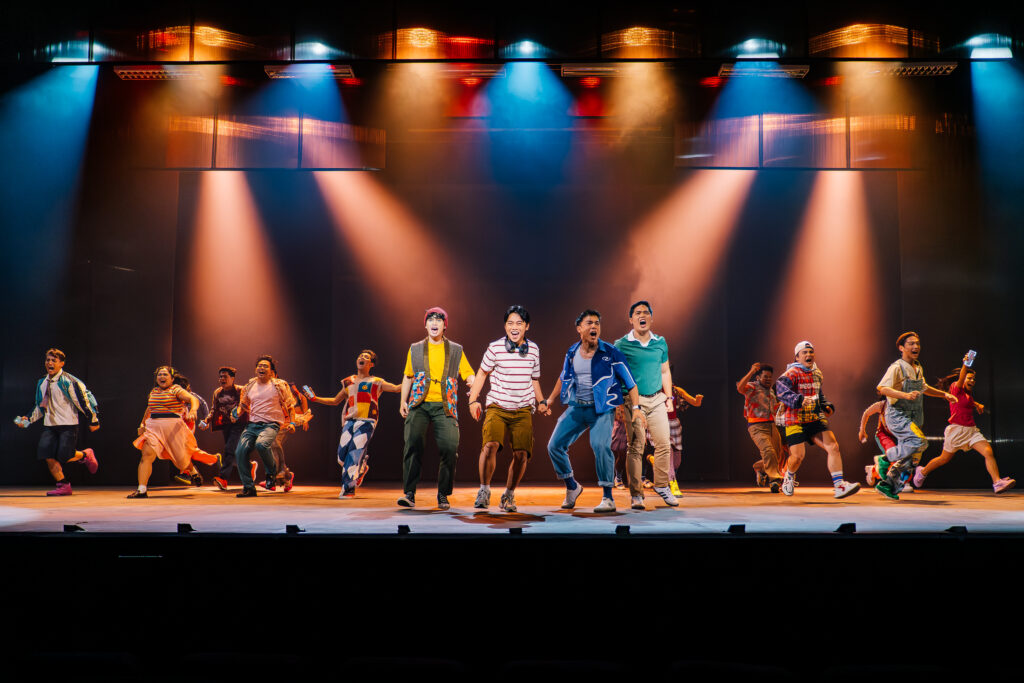
The case for Ateneo theater is no different. Ateneo Blue Repertory (blueREP), Tanghalang Ateneo (TA), and Ateneo ENterteynment para sa TAo, Bayan, LAnsangan, at DiyOs (ENTABLADO) also faced their own set of unique challenges in transitioning theater online. However, be it through innovating stage design, adjusting rehearsals, or managing internal work, Ateneo’s troupes recall ways to open their next act by reinventing and redefining theater as a whole.
Act one: Facing the pandemic
Ateneo’s theater season wasn’t executed as expected in March—this meant huge financial losses caused by the sudden cancellation of shows for the organizations involved. For instance, blueREP’s season finale Next to Normal was abruptly discontinued due to “developments related to the virus.”
BlueREP Company Manager, Ticia Almazan (4 BFA CW), recalls how they responded to this obstacle by prioritizing the safety of their members and audiences, who also needed refunding for the scheduled shows. TA followed suit not long after by cancelling their adaptation of Caryl Churcill’s Top Girls, which was set to go live in March.
Ateneo ENTABLADO, on the other hand, had only finished their first week of shows before calling off the remaining runs of their season finale Macli-ing Rebista. Carlo Oleta (3 AB POS), Company Manager of Ateneo ENTABLADO, shares that the Council of Organizations of the Ateneo-Manila and the Sanggunian came to their aid through the provision of a subsidy to help shoulder their losses.
Finances were already a problem pre-COVID and only significantly worsened when theater went online alongside Netflix releases. TA Company Manager Nicole Chua (4 AB COM) laments, “Before, we’d get departments and parang sure naman na may manonood kasi Ateneans are sometimes interested in watching. But now that it’s online nakakatakot kasi it’s so easy to pirate or people will be like ‘Oh, I’ll just watch Netflix instead.Why will I pay for a production?’”
Internal affairs are not free from challenges as well. Theater companies comprise many teams and functions—as all operations switch from sharing one physical space to a digital space, communication has grown more challenging than before, according to Chua.
Act two: Finding new meaning
Despite these drawbacks, the show goes on. As theater as an art form moves online, Ateneo’s company managers find themselves facing one question: What separates digital theater from film? Gone are the days of performance being bound to a venue audiences must visit in order to experience it—at least for the time being. The two fields that used to be distinct now merge in creating the online set-up.
Oleta shares that the COVID-19 pandemic taught Ateneo ENTABLADO to ask the question, “What is theater?”
Almazan believes that the pandemic challenges the community to rethink the definition of theater. “I think it’s true kasi na theater is being reimagined,” she says. “We’re really revisiting the roots of theater and what makes theater, ‘theater.’ We’re revisiting the core of theater, and in many ways, we’re trying to reconcile what makes theater vis-à-vis film,” Almazan shares.
For Chua, theater is marked by a collaborative process that never stops evolving until the last show closes its curtains. “I think it’s still the process of constantly improving, constantly changing and not leaving the product as is,” Chua asserts, acknowledging that produced movies usually do not have the same liberty.
“[While] we’re in a way redefining theater, [we’re] also at the same time going back to what theater really is—which is storytelling naman talaga,” Chua adds.
Act three: Making the most
Having learned how to redefine theater, the next challenge was on the more technical end of production. Productions are usually what keep theater organizations alive because of the participation of audiences and actors.
With the pandemic, Almazan explains that the biggest challenge is staging a full-blown play since productions face the issue of distributing the work to teams that are used to working in physical settings.
“We’re still trying to figure out what some of the teams can do online, and how they can do that effectively while staying true to their responsibilities on site,” she shares.
Regardless of these obstacles, theater is still able to cope and even innovate during the pandemic. blueREP still plans on doing four productions and they have also readied departmental manuals to help their members navigate in this online landscape.
Behind the scenes, set designers would make backgrounds for the green screen. Then, they would coordinate with the cast to go on a house tour so set designers could pick a location to shoot a particular scene, discloses Chua.
Rehearsals under the “new normal” have also been challenging. Oleta shares that a struggle they currently have in preparation for their season launch is bouncing emotions with their partners. “There’s like a concept na kailangan mag-reciprocate kayo ng energy ng scene partner mo para maging totoo ‘yung eksena, ganyan. Pero ang hirap talaga kung kama lang yung kausap mo, ‘di ba? Kaya nadadaan sa voice, sa audio, yun na yung nagiging source of energy. So yeah, nag-aadapt lang talaga.”
(There’s like a concept that you have to reciprocate energies with your partner to make the scene feel more real, but it gets much harder when you’re just talking to a bed, right? So we just try to make do with the voice and audio as our source of energy. We just really have to adapt.)
While online theater doesn’t have as much of an audience as pre-COVID theater, Chua contends that being in the digital space extended the reach of their productions. “[The] online sphere opens parang a gateway for other people to watch: Other people abroad, alumni who haven’t been in the Philippines for quite some time, and international audiences as well,” she says.
Curtain call
Despite various roadblocks brought upon by the pandemic, Chua still asserts that theater remains a tool of social change. This sentiment is shared by Oleta, who adds, “[Theater is] really important, especially now [that] we’re surrounded by an atmosphere of people trying to censor [and] suppress. What really drives people talaga is [the] need to tell stories, to tell narratives because that is what will push us to do something about what’s currently happening.”
Furthermore, theater gives the opportunity for individuals to internalize different perspectives, and empathize with the characters that they watch through a play. Almazan reiterates the importance of having conversations with their audiences; she believes that active participation makes it better for people to connect to their acts.
With the current political landscape of the country, discourse has proven to be an essential cornerstone for the theater troupes’ performances. Chua sees TA further navigating long-time problems of social inequality and power abuse given that the lockdown has pronounced their gravity even more. “We can reinforce these ideas through theater,” she says. “Dissent and discourse is so important lang talaga, so I think ito yung main themes [that] will reveal itself after the pandemic—especially if we get to go back before election season.”
Almazan also hopes that the community built during the pandemic stays when theater returns on-site. The core board and company managers of the three organizations strive to meet with each other more often so that they can “bounce ideas off each other” since, as Almazan shares, they’re all on the same ground.
What comes after lockdown may be a worry reserved for a post-COVID future, but it’s not bad to look past the pandemic and think of how much more the craft can innovate. Oleta asserts that despite the difficulties brought by the new setting, the thought of venturing into the new field of online performance makes for an exciting experience.
“I think this is not a substitute [for] theater, but instead the start of something new,” Oleta concludes.