

 Theater & Arts
A METEOR crash is all it takes to launch a town into a welter of crazed singing, dancing, and bloodshed.
Originally mounted by StarKid Productions, Ateneo Blue Repertory’s (blueREP) newbie staging—or should we say conjuring—of The Guy Who Didn’t Like Musicals revolves around everyman Paul Matthews (Kevin Maroon), who scrambles to escape Hatchetfield after the town becomes a musical Armageddon overnight. Directed by Diandra Lee, with musical direction by Miguel de la Cruz and Dia Papio’s choreography, The Guy Who Didn’t Like Musicals is as riveting as it is harrowing, making it a horrifically wonderful choice for welcoming blueREP’s 34th season.
A story so astronomical

Photo by Chrisdale Lopez
The eponymous opening number is a fantastic way to kickstart the show. Synthesizers play a ghastly tune reminiscent of classic horror scores while the ensemble, masquerading as a horde of undead, twitch and lurch across the stage. They don smiles and dance with increasing vigor as the song unwinds, adding to their uncanniness. As if this isn’t enough to send a chill down the audience’s spine, Jethro Nibaten’s lighting coats the cast in a sinister blue glow. This riveting track sets the mood for everything to follow—macabre yet entertaining.
Once the song draws to a close, Charles Yee’s set design transforms the stage from innocuous suburbia to drowsy workplace. Paul and his coworkers appear, office ambiance filling the theater as they pluck away at their keyboards.
The audience is then introduced to kindhearted Bill Woodward (Zalino Gutierrez), fixated on proving to his daughter Alice (Ryann Dueñas) and ex-wife that he can be a good father. Stationed at the desks beside Paul are scatterbrained Charlotte Sweetly (Riri Dauigoy), who frequently launches into neurotic tangents about her distant husband, and self-proclaimed sleazeball Ted Spankoffski (Aaron Pahati). Paul’s most defining trait—his hatred for anything musical-related—is promptly established after he refuses Bill’s invitation to watch Mamma Mia at the theater downtown.
Paul declares that sitting trapped in a musical is his “own personal hell” before leaving to get coffee. This is where he encounters “Latte Hatte” Emma Perkins (Mary Mangubat), who also loathes musicals. However, when a meteor breaks through the clouds later that night, the world, as Paul knows it, is thrown out of kilter.
What starts as one woman riffing along the sidewalks becomes a choir of townspeople, hellbent on afflicting all of Hatchetfield with perfect pitch and jazz hands—that is, by killing them.
Unwilling to become casualties of the town’s murderous festivities, Paul and his friends seek refuge at doomsday survivalist Professor Hidgins’ (Noel Noguera) bunker. There, they devise a plan to survive the apotheosis.
A real show-stopper
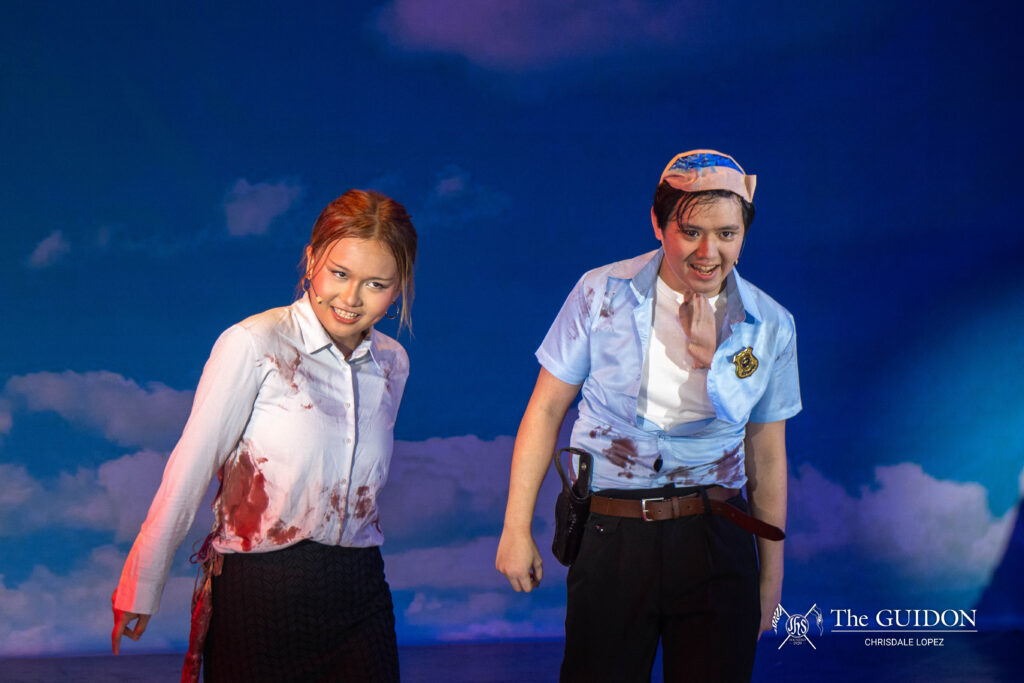
Photo by Chrisdale Lopez
Throughout the production, Maroon excels at capturing the titular character’s simplistic nature. Alongside him, Mangubat, whose line delivery is mechanical for much of the show, effortlessly glides through notes as she croons. The harmonies she forms with Cristal and Ocampo in “Cup of Roasted Coffee” are reminiscent of boogie-woogie performers from decades past.
Maximizing their own shares of the spotlight, the rest of the cast effectively embody archetypes commonly found in apocalyptic fiction—from zombified first responders to the knowledgeable professor. Despite a few strained notes sprinkled throughout ensemble and solo numbers, it’s impossible not to be swept along by the performers’ infectious zeal.
Beriña’s performance of “What Do You Want, Paul?” can be dubbed as one of the most amusing—and perhaps raunchy—scenes in the musical. Meanwhile, laughter could not be avoided whenever Pahati saunters onstage with his wonderful portrayal of Ted as a spineless douchebag who believes every woman lusts over him. Noguera also makes for a spirited Professor Hidgins, especially as they gallivant around the stage during their “Show Stoppin’ Number.”
While every cast member breathes life into their roles, Dauigoy went the extra mile to embody Charlotte. Not once did she give the impression of reciting from a script, showcasing authenticity with the quavering in her voice as she delivered Charlotte’s panicked rambles and the grimaces that frequently contorted her mouth. Additionally, her vocal prowess shines in “Join Us (And Die),” electrifying the audience with one powerful note after another.
Think about the implications
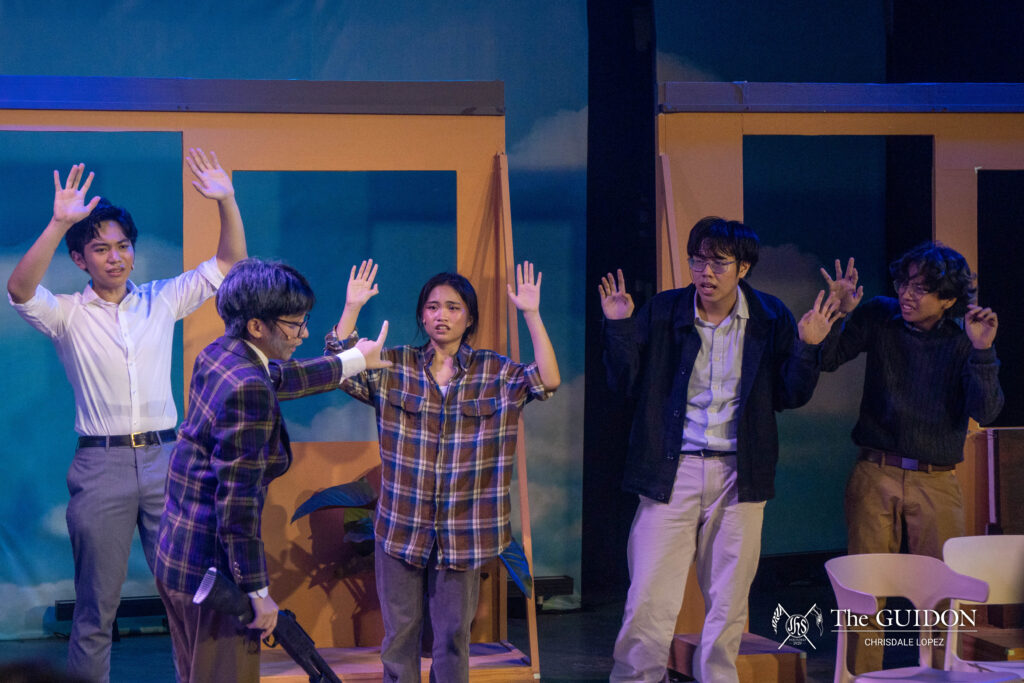
Photo by Chrisdale Lopez
While the chances of falling victim to a musical pandemic—and getting disemboweled in the process—are slim, The Guy Who Didn’t Like Musicals is not entirely rooted in fiction. Despite the show’s knack for placing characters in absurd situations, certain scenes have cracks through which reality permeates.
Gutierrez and Dueñas’ depiction of the dynamic between father and estranged daughter tugs at the heartstrings. Bill’s consistent efforts to repair their relationship make the events following his attempt to rescue Alice all the more gut-wrenching. Moreover, Charlotte’s attachment to her husband Sam illustrates the difficulty of withstanding poison when it tastes sweet—a feeling that those with maladaptive coping mechanisms surely understand. In the end, Charlotte’s inability to resist Sam, who always treats her as an afterthought, leads to her tragic fate.
Aside from personal struggles, sociopolitical ills are also threaded into the fabric of the musical. Professor Hidgins proposes that there is no use stopping the apotheosis: “The world was already doomed. Not by them, but by us!” True to this line, the townspeople of Hatchetfield are apathetic to the beggar roaming the streets. A humanitarian organization solicits donations for noble advocacies, only to line the coffers of corporate grandees. All authority figures in the musical operate on fear, with “Show Me Your Hands” being punctuated by the frightened shrieks of Paul and his friends as policemen brandish guns at them.
The horror-comedy charm of The Guy Who Didn’t Like Musicals beguiles the audience into laughing at every punchline and gasping whenever someone’s flesh is torn apart onstage. And yet, underlying the production’s convergence of farce and gore is a chilling warning against what might happen if society continues to bastardize itself. After all, the loss of empathy spells the death of humanity.
With its distinguished artistic team, talented performers, and their collective ability to keep such an outlandish story grounded in reality, The Guy Who Didn’t Like Musicals is sure to gnaw at audiences’ brains long after the curtains are drawn.


 Exposé