

 Theater & Arts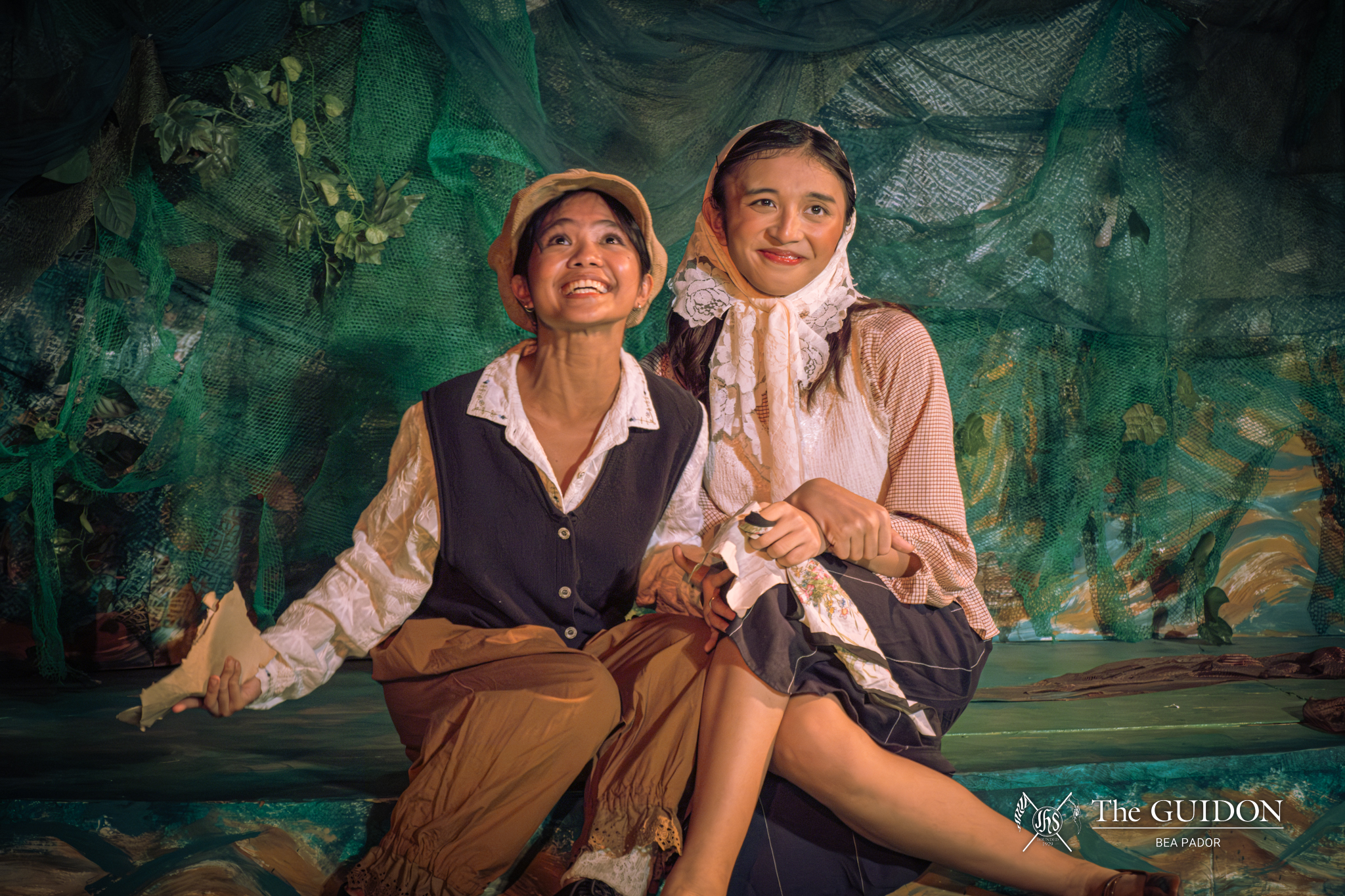
HOW DOES music encapsulate love? Is it found in a single element of a song, or in the art born from its intricate creation that breathes life into a piece?
Tanghalang Ateneo’s Paano Man Ang Ibig sings the answer to this question as it follows Orlando (Meeka Sayaboc) and Rosalinda (Chloe Abella)—two exiled souls who find each other in the forest of Arden. Being an adaptation of As You Like It by William Shakespeare, the play is a dramatic musical directed by Cholo Ledesma and translated by Rolando S. Tinio.
As Orlando and Rosalinda’s lives converge into a single harmony with the Basalyo—the people of Arden—the production speaks of how love is first born from the desire for freedom and how different sounds of life can merge into one harmony.
Hymns of freedom
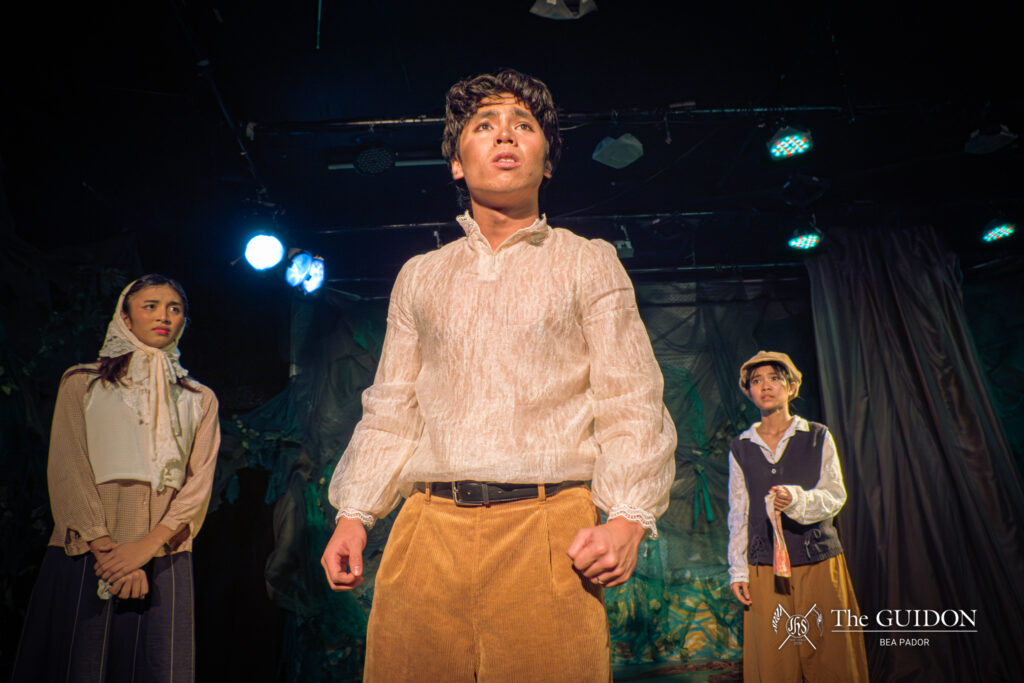
Photo by Bea Pador
From a wordless, mellow hymn first felt by the audience, the show begins with an escalating tempo that composes a space for a distant sense of yearning. At its end, Orlando expresses his desire to be free from Oliveros’ (Enrico Figueroa) denial of his education and a share in the land.
A hum follows soon after, introducing Rosalinda—the unapologetically outspoken daughter of Duke Senior. Together with Orlando, they convey a longing to love without the weight of their fathers’ reputations. While Sayaboc swoons the viewers through his poetic declarations of love, Abella charms the viewers with her skeptical-turned-optimistic view of romance.
The desire for freedom also takes on a third form in the play, with Rosalinda’s cousin Celia (Petes Castillo) orchestrating an escape from her familial ties after her father Duke Federico (Chen Lee) unjustly sentences Rosalinda to exile. Regardless of her own banisment, Celia bravely accompanies Rosalinda and chants “Tayo na sa pagkalaya at hindi sa pagkatapon!” (Let us head toward freedom and not exile!)
Unbeknownst to them, this line foreshadows the change that comes from wanting more than what one already has, at the expense of forever leaving behind the past.
Interwoven in these desires is the gentle lull that love stems from yearning for freedom. Akin to how music may consist of different hymns, these wishes led Orlando, Rosalinda, and Celia to seek a fuller sound: a limitless life filled with more space to exist and love.
In pursuing this sound, they take the first step to freedom and loving—accepting one’s feelings.
Lyrics of affection

Photo by Bea Pador
While the hymn of freedom lingers around the borders of the stage, what makes them breach the line before the audience is the three platforms of the Forest of Arden. Surrounded by trees and plants made of sheer fabric and curtains, Julia Macuja’s spacious yet immersive stage design allows emotions to reverberate onstage and reach viewers.
The extensive stage arrangement builds a crescendo from sound to songs, setting the atmosphere for the next act. Once Orlando, Rosalinda, and Celia reach the forest, the harmonies shift into music that invites the audience to pay attention to the lyrics. These songs reflect the message that the desire to be free must be written down and acted upon, whether in community or life itself.
As a result, the music of love evolves through Sage Ilagan’s compositions, carrying moments of lyrical affection, such as “awit na hanggang umaga, buhay nati’y masaya!” (A song until the morning, our life is happy!) sung by the Basalyosand Amiens (Nadia Tuviera) out of gratitude for their life in the forest. Vocalizing how fragile yet beautiful life was within their community, they harmonized “buhay ay bulaklak, (na) minsan lang dumadaan” (Life is a flower that only passes by sometimes.)
Breathing life into Ilagan’s lyrics are the newbie cast and the behind-the-scenes team that consists mainly of women, immersing the audience in the prowess of the female gaze. This further sparked a synergy that allowed the characters’ relationships to progress in perfect chemistry.
Through the cast’s virtuoso and emotional attunement, the audience even momentarily forgets how the portrayers are only freshly emerging in the theatre scene.
Whether it’s Orlando’s courtship or Celia’s loyalty, the innate ability to love is ardently performed by the cast and thoroughly supported by the show’s logistics.
Songs of togetherness
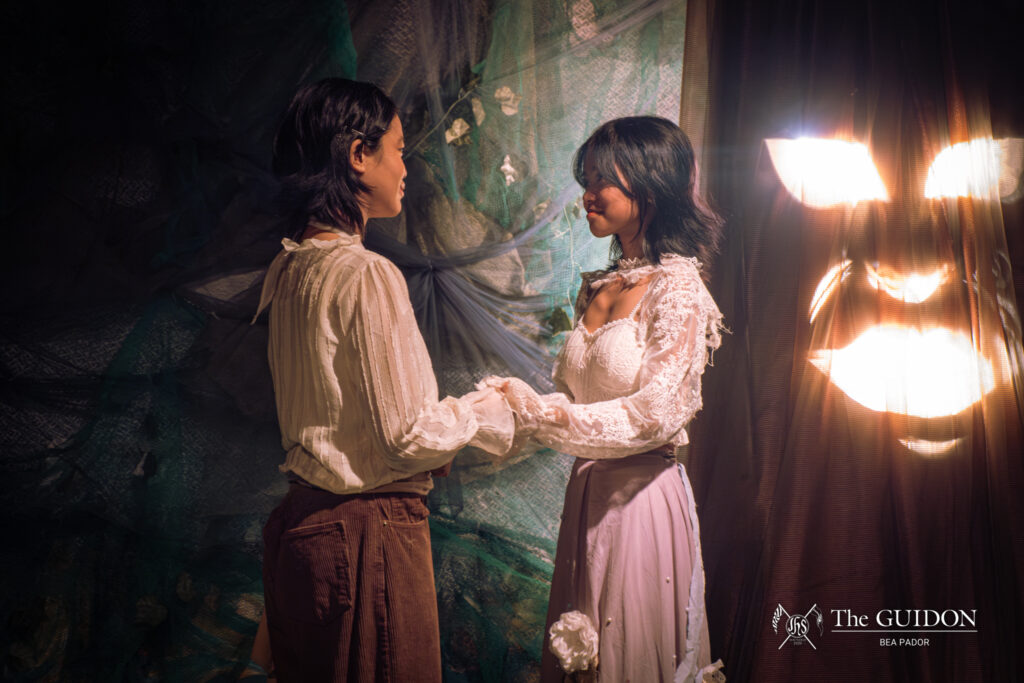
Photo by Bea Pador
In the fourth act of the play, Rosalinda, in hopes of Orlando marrying her, decides to set up a joint wedding for Tocapiedra (Jamil E. Datudacula III) and Audrey (Abigail Louise G. Narvaiza), Oliveros and Celia, and Silvio (Thandie Aliño) and Pebe (Bianca Lucia de Guzman and Javen Ashley Silvestre).
In the middle of the marriage ceremony, Himeno (Jenny Jamora)—the god of the Forest of Arden—intervenes to bless the couples. Despite taking the form of a tree, Himeno dominates the atmosphere through the strategic use of lights and sounds, making his regal presence the only source of light. Combined with a sole commanding voice, the audio-visual production emphasized how the god’s approval was crucial in their sacred union.
The use and manipulation of lights also developed the intimate ambience of the wedding by giving each pair their momentary spotlight, with Orlando and Rosalinda standing out the most.
Aside from the protagonists, Silvio’s union with Pebe, which used to be devastatingly one-sided, turned out to be one of the sincerest displays of devotion. In the end, his integrity led Pebe to reciprocate his feelings—a testament that the language of love does not have to be grand in order to be believed.
What plays after the end of the wedding is a celebration where the cast all sing and dance about togetherness. At its denouement, the audience ultimately witnesses an all-encompassing music of freed hymns, tenderhearted lyrics, and cherished anthems—created from their own grace to love and to be loved.

 Exposé