
 Hub
Hub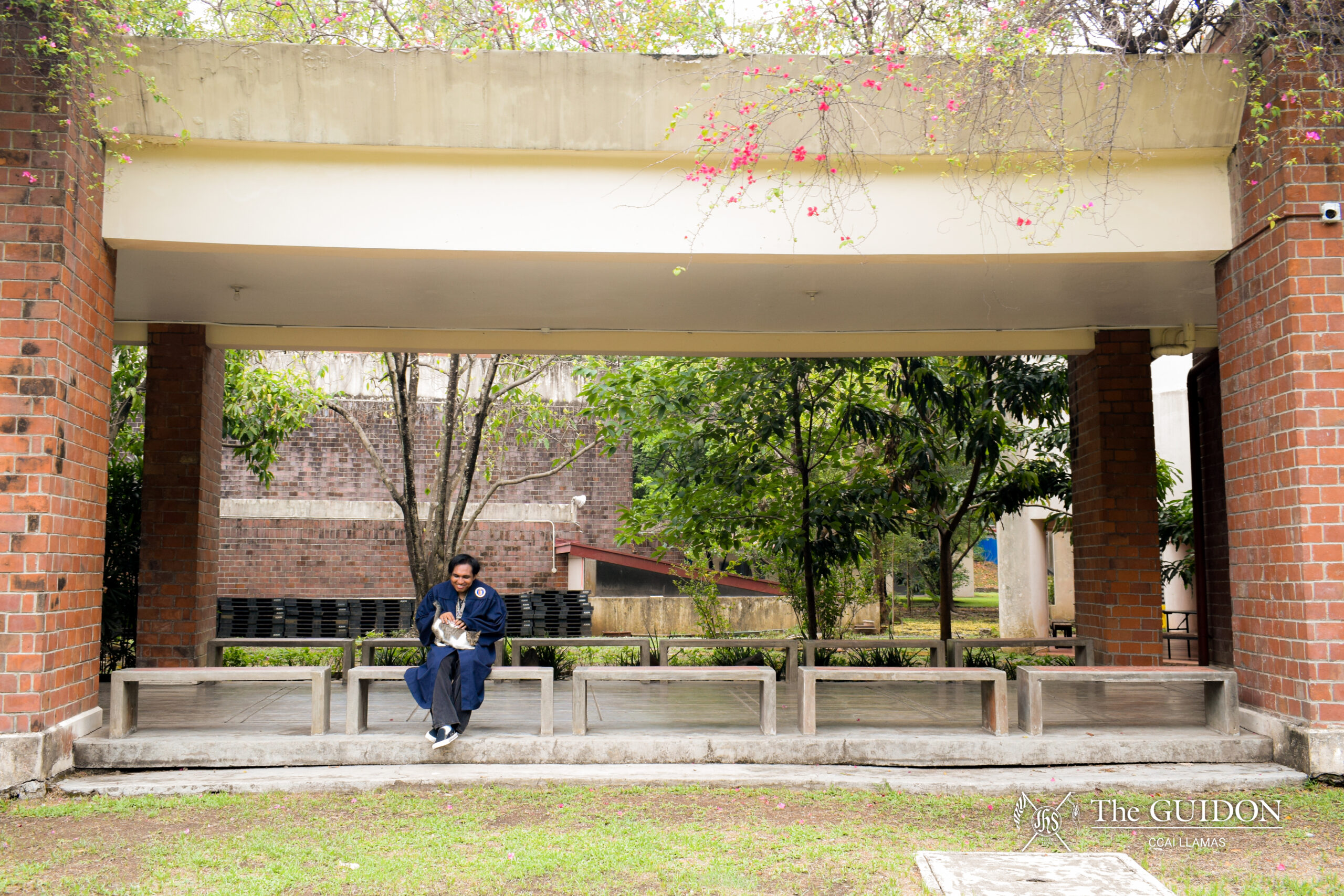
COLLEGE ENDS on a random day, as the common saying goes. Seniors often find themselves in an odd position as they count the days before graduation, standing at an exit they aren’t quite ready to walk through.
Beneath the apathy toward the final requirements in their final semester lies the heavy weight of knowing that once they are submitted, the college chapter is officially closed. The process is a slow, gradual detachment from the only life a student has known for so long. Resonating across the years, this feeling is commonly referred to as senioritis.
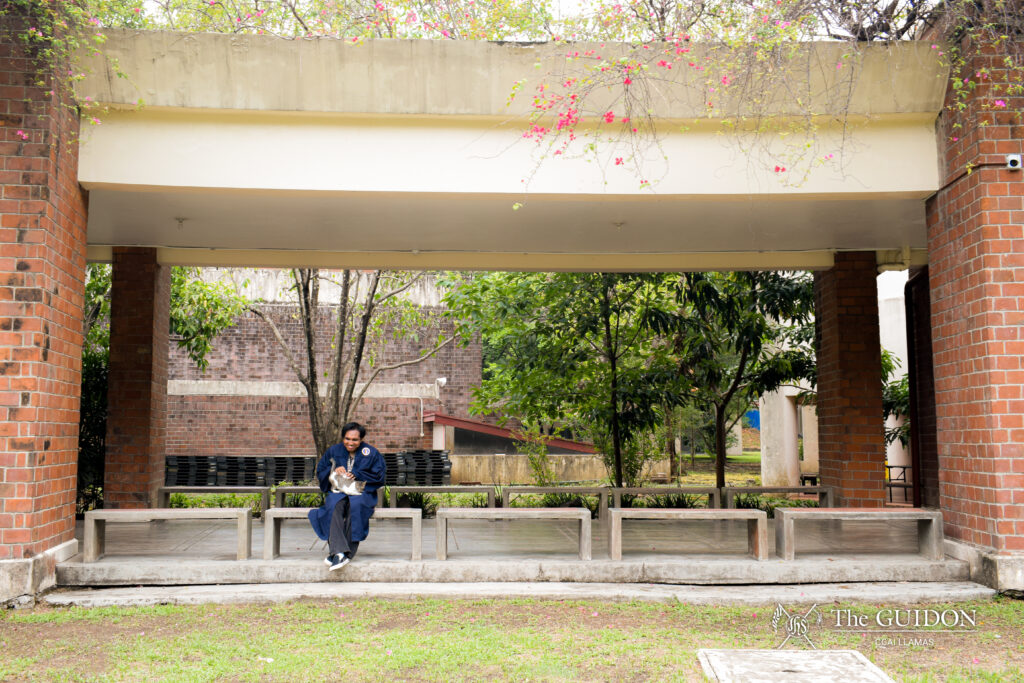
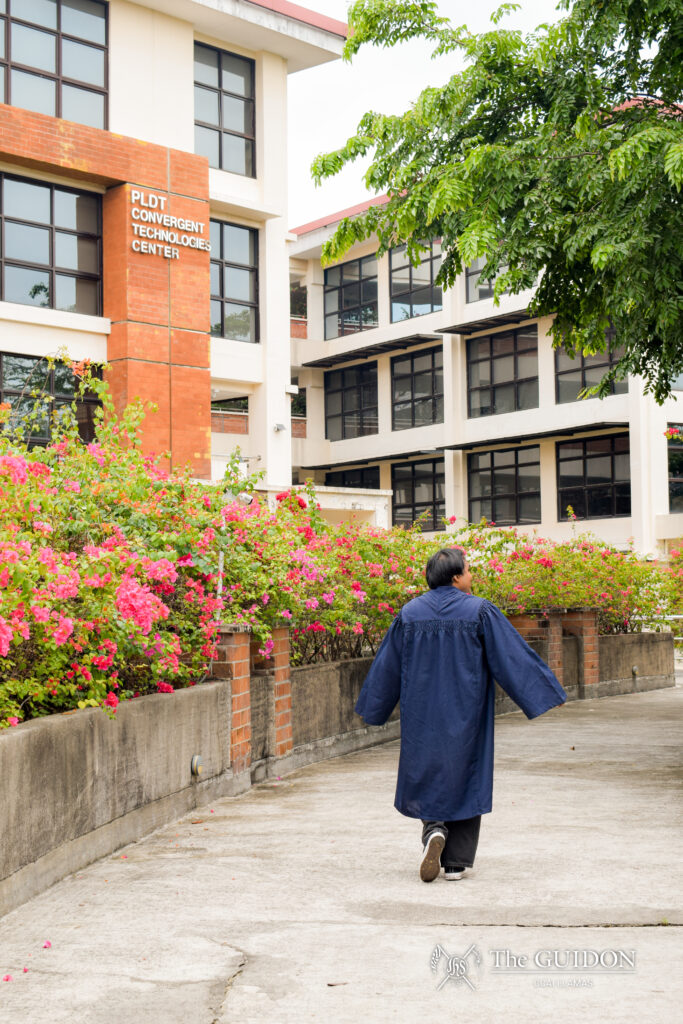
There is the beauty, fulfillment, and sense of closure that finishing college brings, but there is also the uncertainty, pressure, and looming realities of what comes after graduation. For many, the experience feels like being left to navigate the strange transition of being gone yet still being there—suspended between their final footsteps on campus and the gown and medallion that wait to make it official.
The last stretch
Four years of college pass on a whim, leaving little room to process the sheer volume of growth that has occurred along the way. This journey often comes with the initial anxiety of finding one’s place, eventually gaining a sense of belonging, and then having to leave what already feels like home.
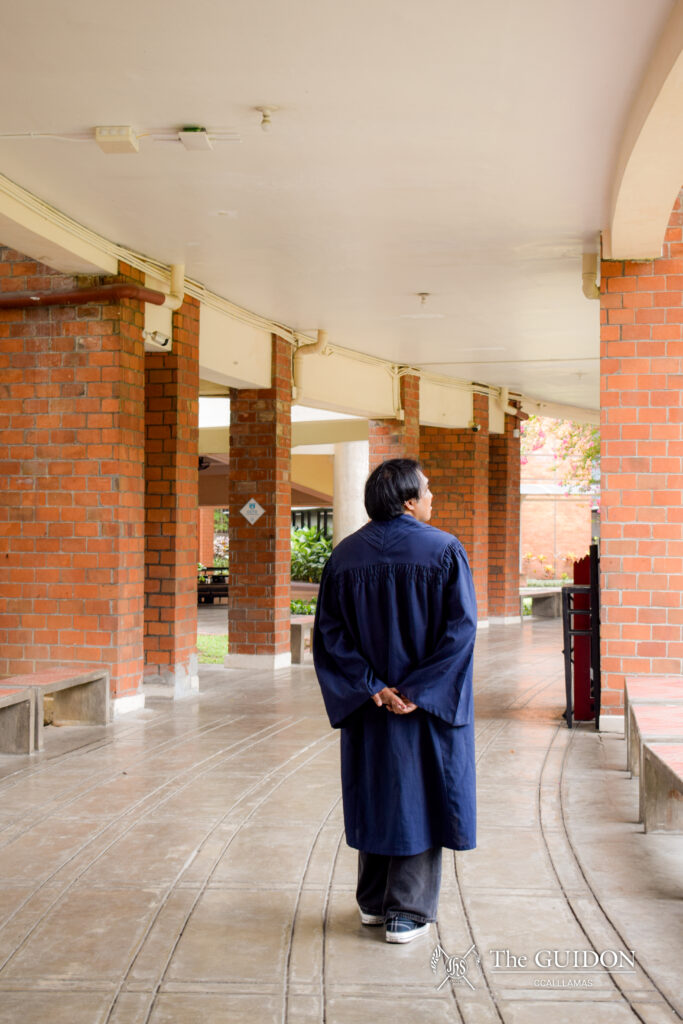
Before the first step toward the stage that closes seniors’ college chapter, there is a momentary pause for one final glance at what they’re leaving behind: the warmth of the community, the comfort of the campus, and the joy found in the simple passing of days.
For Aga Fernandez (4 AB MEc), shifting majors during sophomore year came with its own set of difficulties. Despite this, her move to a new program allowed her to become more intentional about her path and the individuals she chose to surround herself with.
Now a senior, Aga describes senioritis as a complex intersection of exhaustion and reflection. “It’s that feeling of being so close to the finish line while also trying to savor everything before it ends,” she notes.
There is a bittersweet quality to this final year of college where mundane routines begin to feel increasingly precious.
For fellow senior Ella Lua (4 BS REnt), senioritis often manifests not as dread or sadness, but as a heightened awareness of the present. “For me, I became hyperaware of every single moment I am experiencing,” she shares.
Ella expresses that it is the effortless community of campus life that she will miss the most, where catching up is often as simple as a chance encounter on the way to a lecture.
Aga echoes this sentiment, noting the unique atmosphere of shared growth and collective striving. “There’s something special about being surrounded by people who are all learning and growing at the same time,” she expounds.
Yet, beneath the sentimentality lies a quiet, underlying terror that all seniors must face: the uncertainty of the future. Stepping away from campus means living life on your own terms—no longer bound by a syllabus, a rigid schedule, and the relentless studying for exams. Instead, there is the pressure that comes from endless job hunting, nerve-racking preparations for further studies, or even choosing to take a break.
Aga recalls that as early as junior year, she purposefully shifted away from stacking her achievements and instead made space for intentionality in everything she does. She notes that during her final semester, instead of chasing accolades, she shifted her focus towards connecting with others and learning more about herself.
Ella shares a similar sentiment on self-discovery, noting that her most significant milestones were often commitments she never expected to make. “[Those leadership roles] ended up becoming my biggest milestones because I didn’t have any expectations for the outcomes,” she reflects, “I just did it and did my best. Thankfully, the outcome was very fulfilling.” College, it seems, has a unique way of putting students through those kinds of meaningful, unexpected experiences.
As both Aga and Ella steal their final glances back at the campus, they carry with them the beauty of doing things with intention and savoring the last few sunsets with their friends, orgmates, and blockmates.
One final look
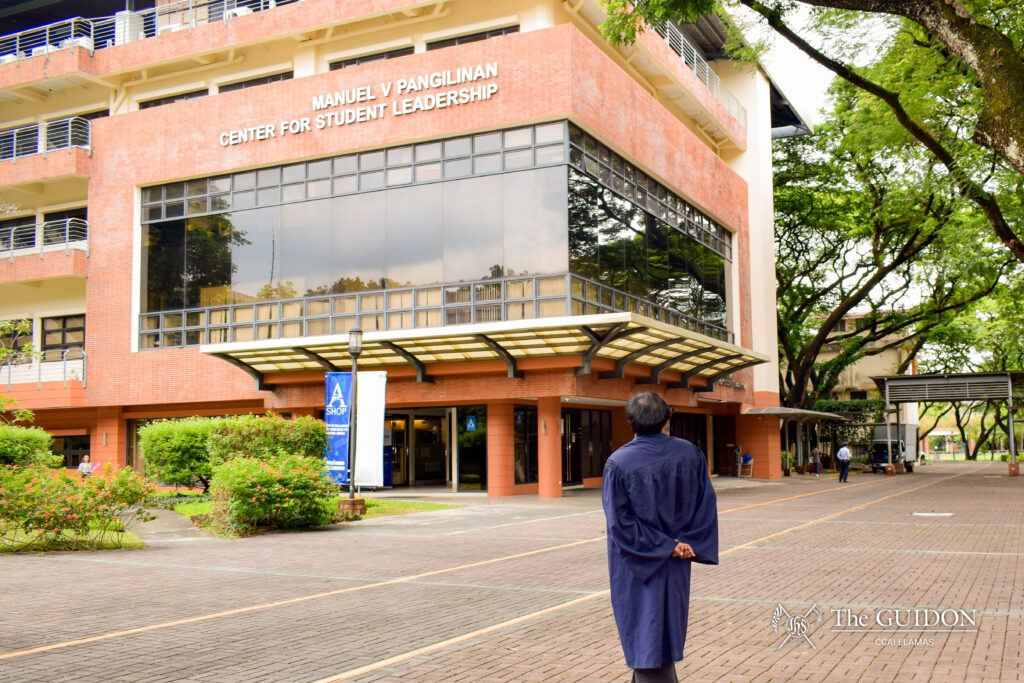
While seniors grapple with finding closure of their stay in the University, they must simultaneously confront the hard reality that the community they shared tears, laughter, and conversations with will also go on their own journeys.
For Ella, her time at the University was a “breeding ground” for self-discovery and community. The relationships she was able to foster were often tied to the same environment they are now preparing to leave. Thus, among seniors, there is often a quiet but shared understanding that the intimacy of a sunset on the field or a shared table in the library is a product of a time and place that cannot be replicated beyond the campus.
Aside from shared moments in classrooms and hallways, college also comes with projects that bring a profound sense of fulfillment.
Ella, for instance, served as the General Manager of ANYO, a six-course Filipino tasting menu crafted by a group of BS REnt seniors. Their concept is anchored on a single, foundational ingredient: coconut and its diverse forms or anyo.
“ANYO has become a platform for [our team] to showcase our ideas, camaraderie, and, most importantly, our love for Filipino cuisine,” Ella expounds. Having completed nine consecutive services together, she and the rest of the ANYO team ended up not only valuing the success of their senior project but also the genuine, deeper friendships they found with one another.
Similarly, Aga is the Chief Executive Officer of her thesis startup, Sibol Creamery, a social enterprise that transforms locally grown rice into artisanal ice cream. Alongside her thesismates, their vision was to operate not just as students, but as entrepreneurs working towards tangible social impact.
“At its core, Sibol is about creating something innovative yet rooted in local culture—not just to promote Filipino flavors, but to increase the value of local produce,” Aga explains. Her team finds fulfillment in collaborating directly with local farmers, an effort that earned Sibol Creamery the inaugural KisLap championship, a Php 1,000,000 grant from the Ateneo Center for Social Entrepreneurship and the Kwan Laurel Social Enterprise Fund.
Throughout four or more years, college then becomes a compilation of these shared spaces—of growth found in classrooms, projects, and advocacies.
As Ella and Aga prepare to graduate, this transition also marks a turning point for the ventures they built within the campus gates. Both of them shared that the end of their stay in Ateneo does not necessarily mean the end of the road for their initiatives.
However, while both share a deep desire to see their projects flourish beyond the campus, they also recognize the necessity of first stepping into the “real world.”
As the calendar dwindles for seniors like them, they feel the cumulative weight of every “last”—the last onsite class, the last organization event, the last presentation, and the last vacant hour—all shadowed by the underlying dread of what comes right after.
First step forward
Both Ella’s and Aga’s experiences may be familiar and even resonate with the graduating seniors. In fact, their perspectives may be all too familiar for Theology Department Chair Michael “Lib” Liberatore, PhD, who teaches the core subject Discerning Life Questions (DLQ 10).
After years of teaching seniors how to process their final year in Ateneo, he views senioritis as a spectrum of emotions. For some students, leaving the University might mean facing the tumultuous world, while some simply treat college as a stepping stone to a larger goal. Regardless of these varied experiences, Sir Lib believes that graduation comes with a sense of letting go that students must eventually face.
For Aga, letting go becomes somehow easier, knowing that she was able to foster and create a long-lasting impression on the people she met in Ateneo. “Leaving a mark isn’t always about recognition; it’s about the impact you’ve had on others and the personal growth you’ve experienced,” she ponders.
Besides reflecting on one’s achievements and bonds, part of learning to let go is reckoning with the possible paths students wish they had taken. According to Sir Lib, it’s important to recognize our mistakes and “allow [oneself] to appreciate them and then to take the next steps forward.”
Still, as students try to let go, they may continue to feel an attachment to university life. With this, he advises students to ritualize their good-byes by scheduling campus visits and meet-ups with friends to make the process easier.
“If you really wanna choose graduation, it’s kind of growing into that choice,” he asserts. In this regard, Sir Lib emphasizes that the weeks before graduation require intentional reflection, where the individual’s emotions and mentality become ready to face the end of their undergraduate journey.
With this, many students like Ella are finding their own ways to soak up the last of their college memories and finally say goodbye. “It’s like I want to remember everything, and it made me a lot more present in all the moments, especially this semester,” she shares.
Although bidding farewells can be an inherently uncomfortable experience, seniors can take solace in knowing that the end of something does not mean life itself will not change for the better. As Sir Lib notes, there is a tendency for students to overstate the importance of college, as if this might be the best time in their lives.
For seniors who feel a sense of true loss and helplessness, he provides reassurance that many students have been in the same position, and these feelings, too, shall pass.
“Don’t overemphasize what [college] has been, as if life is over or complete […] you got a lot of life left to live,” he remarks.
While senioritis might feel like the end of something valuable, the days leading up to graduation also serve as a reminder that life after college is waiting and calling for seniors to embrace it.