
 Hub
Hub
WHETHER YOU are looking up to meet his eyes or to be inspired by him, Chukwuemeka Divine Adili will bend down and meet you where you are with a warm smile and a kind heart.
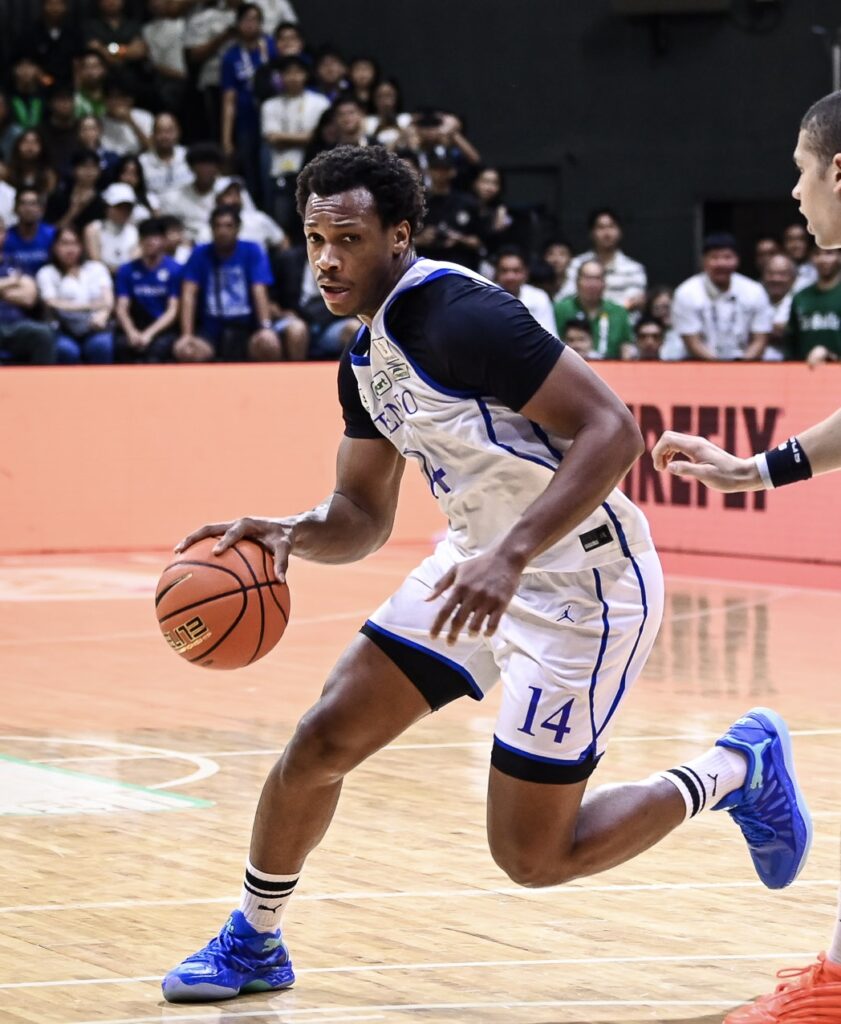
While his stature on the court as a basketball player often placed him under the University Athletic Association of the Philippines (UAAP) spotlight, those who knew Divine beyond the game encountered a sense of gentleness that stood in quiet contrast to his athletic prowess.
“Divine is someone that is really intimidating at first. […] He was big [and] would tower over everyone. But eventually, once you get to know him more he’s really kind, really caring for other people,” Diego Avila (2 AB IS), one of Divine’s blockmate and close friends, shared.
Divine’s Interdisciplinary Approaches to the Arts professor Sabrina Basilio also added that he was a “quiet, […] not a disruptive person, [and] very respectful [student].”
To those around him, these qualities were only a glimpse of the values that had shaped him long before his arrival at the Ateneo.
When Divine moved from Nigeria to the Philippines, he was ready not only to play competitive basketball, but also to represent the Nigerian culture he is proud of. Beyond his public passion for the sport lived his desire to preserve the culture that ran through his and his family’s veins—even reflecting it into his academic work.
“In his paper, […] he [talked] about [how] it’s easy to see Africans as a monolith. This is what I’m piecing together as important to him: seeing his culture, or strands of African culture, given more sensitivity in representation,” Basilio recalled.
To pay homage to his country then became a core principle to Divine’s athletic purpose. As this intention took root, so did his ambition. Like most basketball players at the Ateneo, Divine had aspirations to play at the National Basketball Association (NBA), or to internationally represent his country in the International Basketball Federation (FIBA) stage.
It was no secret that this climb up to a professional level would not be an easy feat. Diego noticed that even Divine himself was aware of the challenges he would face. Yet, his goal-driven spirit never wavered as he understood that being short of a goal was a sign of progress rather than failure.
“That [was] one of the things that he really expressed to us: […] that he’s satisfied [with] where he is. So, each step up [was] just a new level of satisfaction for him,” Diego reminisced.
This sense of contentment extended to the people around him as thoughtful reassurance. Divine would often say, “just do your own thing,” a simple yet comforting reminder that you just have to be who you are.
That compassion was most visible in the way he showed up for others. Whether supporting a friend’s advocacy, encouraging someone’s dream, or taking the time to listen, Divine always made people feel seen and valued.
“It didn’t feel like it was against his will to actually make the effort to greet somebody or to listen to someone fully. It was also like that with his classmates,” Basilio recognized.
These everyday acts of care were extensions of Divine’s character, an exhibition of someone who believed that kindness was not only something to be given to others, but also something to be extended to oneself.
Thus blossomed a culture of helping one another within their block, most especially when Divine had suffered a back injury. Divine would call Diego or his other friends in the middle of the night for help on a requirement, and the favor would often be returned.
“I think it’s a huge testament to a person if people are willing to drop down things to help you even if they have other things going on,” Basilio observed from Divine’s blockmates.
To most, Divine was an athlete. To others, he was family, a classmate, and a friend. As he carried the tandem title of a student-athlete, he bore double the challenges and pressures on his tall shoulders.
However, with the support of the people around him—and, most importantly, through his own resolve—Divine lived a life marked by purpose, indelible kindness, and ambition. Though tragically cut short, his spirit endures within campus grounds and on the basketball court, where he will continue to inspire others to lead with compassion and face challenges with courage.
“I think that’s what he’d want from us—for him to be remembered as a good person, as someone that helped a lot of people, and someone that never says no to a challenge,” Diego imparts.
In the end, what truly drove Divine to holistic excellence was his capacity to care: for his family, his culture, his friends, and the athletic future he was working toward. A gentle giant in every sense of the phrase, he leaves behind a legacy not only of promise and perseverance, but of a heart of gold.