
 Hub
Hub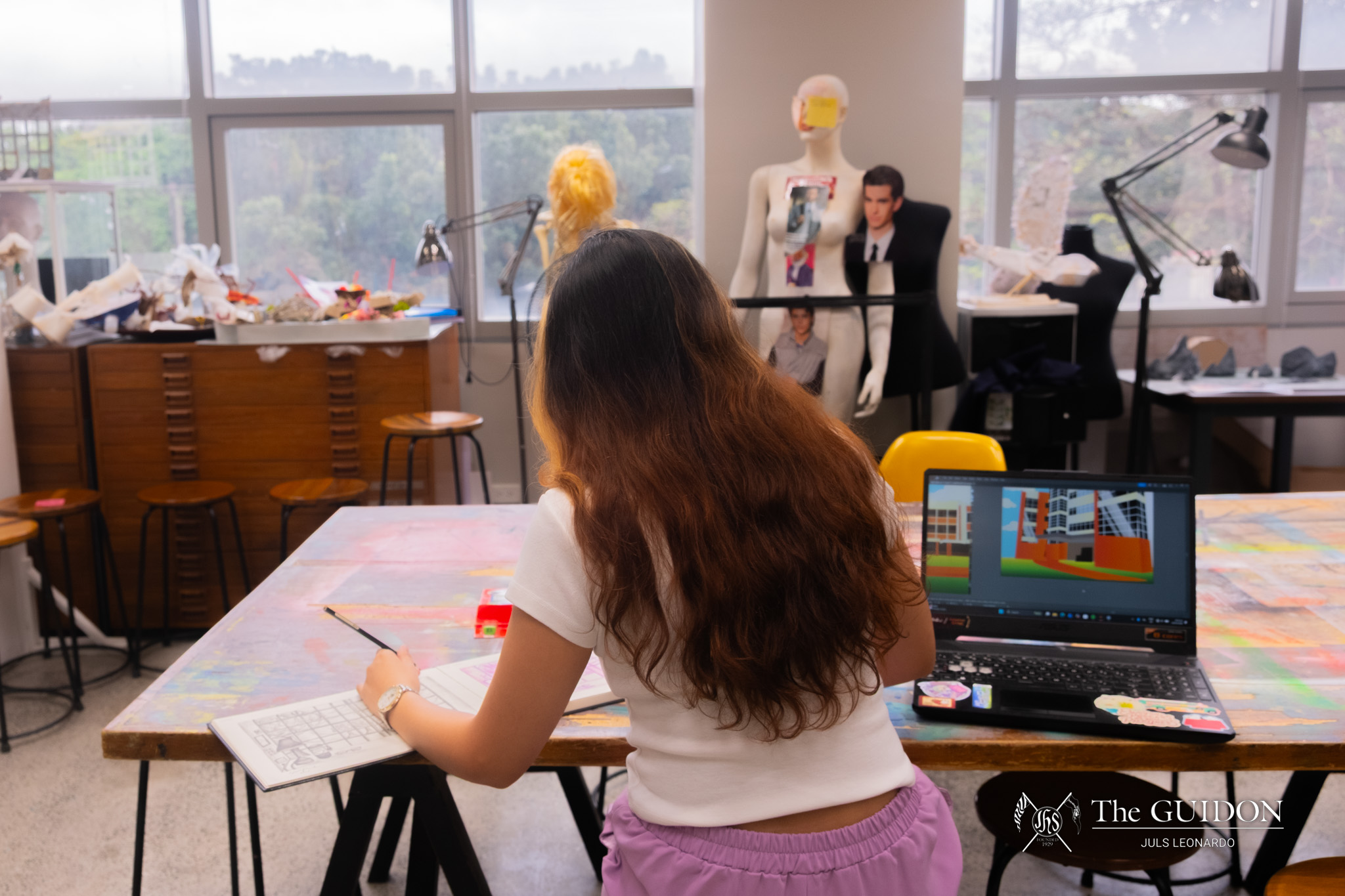
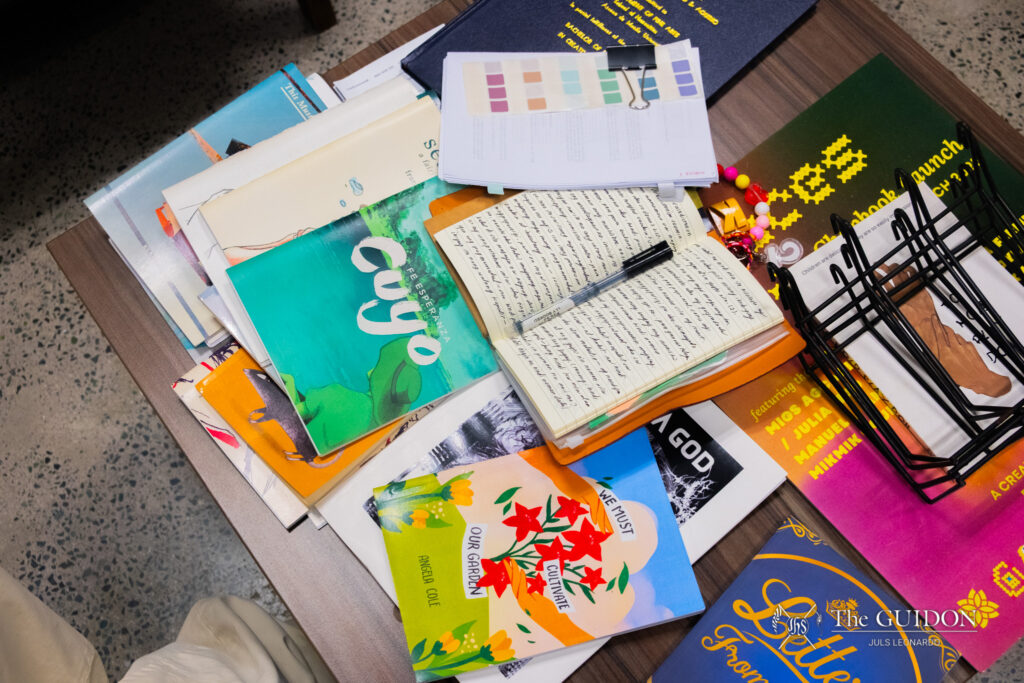
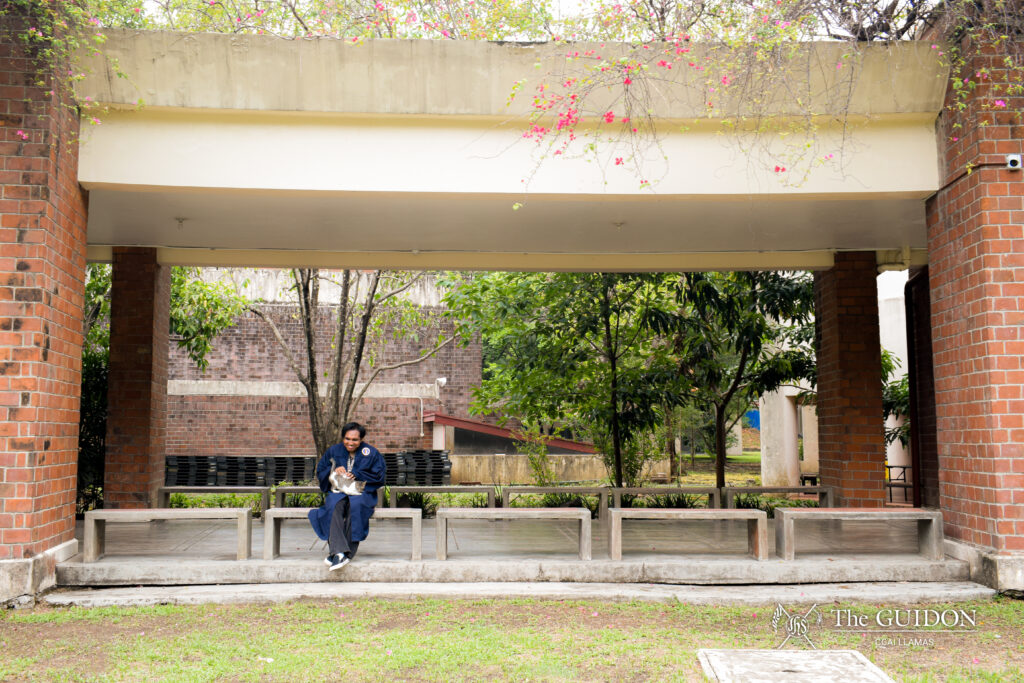
ART HAS always been beneficial to Philippine society. It can open new ways of thinking and draw attention to significant issues, leading to more educated and proactive individuals. The Ateneo reflects this national importance through its creativity and innovation hub, Areté.
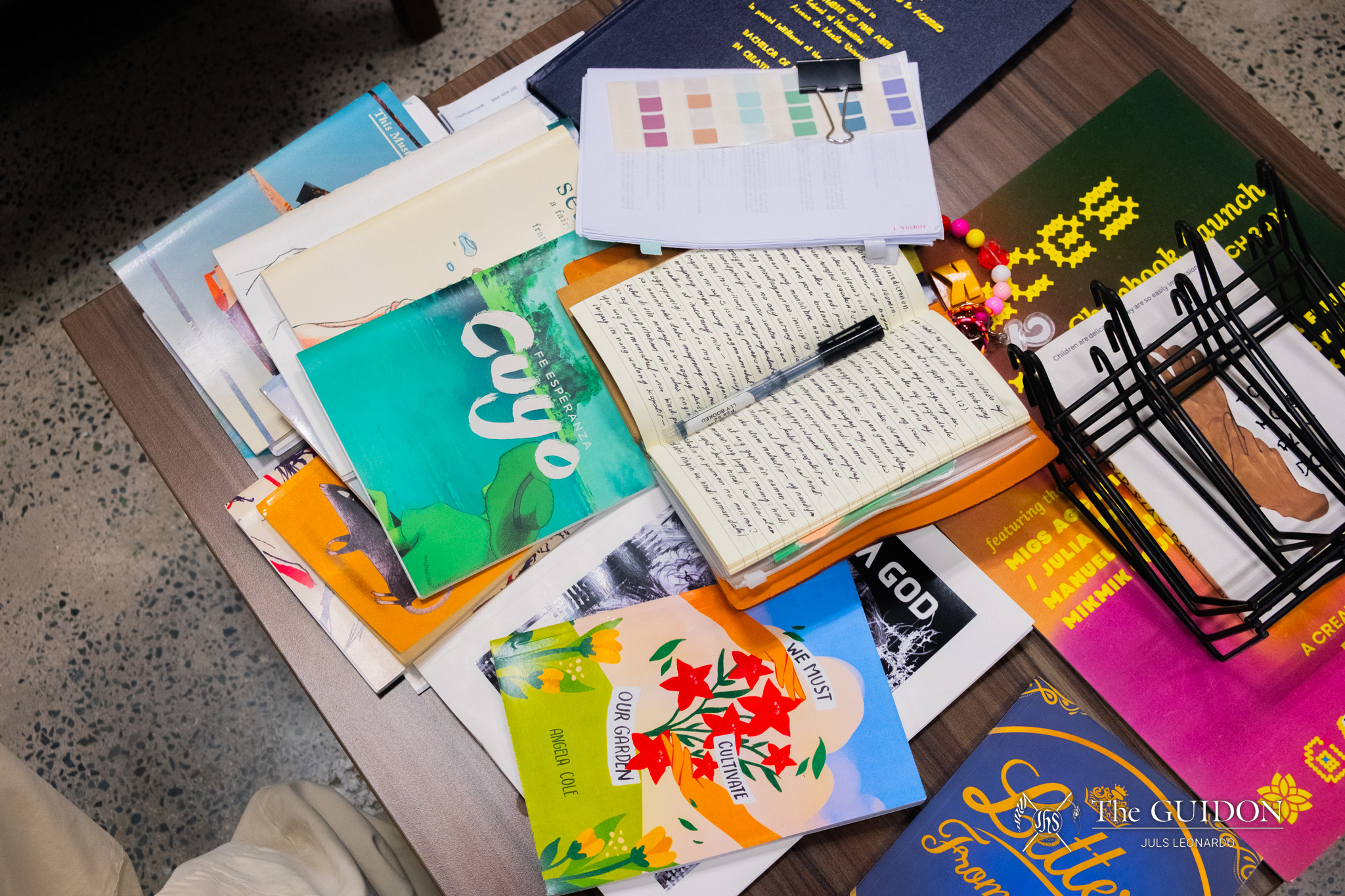
In particular, Vantage Magazine looked into students across the Fine Arts (FA) majors, Arts Management (AM), Creative Writing (CW), Information Design (ID), and Theater Arts (TA), who help cultivate the identity of the campus art scene. Their stories offer insight into both their craft and the community they shape, reminding us that without them, spaces like Areté would lose so much of the color that defines it.
Refining craft and the self
Pursuing an FA course boils down to passion and grit. Technique can be taught, but the relentless drive to keep creating despite exhaustion and uncertainty has to come from within.
Deeply rooted in creativity, Margherita Espiritu (3 AB AM) grew up dabbling in a variety of art forms like drawing, writing, and theater, which fueled her ambition to explore the art world more broadly through Arts Management. She wanted to examine and contextualize art in a more theoretical sense, while also developing critical thinking in literature and language.
Through her time in the FA program, Espiritu claims she was able to shift her perspective from seeing art as a purely political tool to valuing it as a source of beauty that stirs emotion and evokes curiosity. She adds, “art allows you to […] stay grounded [and] hopeful, while also staying critical.”
Meanwhile, Gab Mactal (3 BFA TA) was driven by her lifelong passion for theater when she chose Theater Arts. As a theater practitioner with roots in storytelling and performing, Mactal proclaimed she wanted nothing other than “Theater Arts” on her college diploma.
Through theater-focused workshops, she was able to adopt a “wasting time” approach in theater—a term she coined to describe the continuous practice of embracing flaws and uncertainty— through which she critically examines the intersection of Catholicism and her identity as a queer trans Pinay.
While Mactal finds her voice on the stage, Lia Gutierrez (4 BFA CW) finds hers on paper. Writing daily for both class and personal purposes, Gutierrez wanted to pursue a course that would further hone her literary skills.
Similar to Mactal, the commitment to exploring identity through art is echoed within the creative writing program. For Gutierrez, the curriculum provided a space where her fear of feeling misunderstood dissolved, replaced by a flourishing motivation to write about feminist inquiry and gender equality.
Compared to the others, Ash Santillana (3 BFA ID) embraced a new journey as she applied to Information Design with no prior knowledge of the craft. Yet, thanks to the technical program, she gradually fell in love with graphic design. What began as unfamiliar territory has now become her turf, as she primarily applies her design skills and newfound lens in appreciating the many designs from raw data we see in our daily lives for inspiration.
Throughout her years in ID, Santillana gained the inspiration to explore self-expression and the art scene in the Philippines, so she may highlight local artists, which she explains as “expressing art through art.”
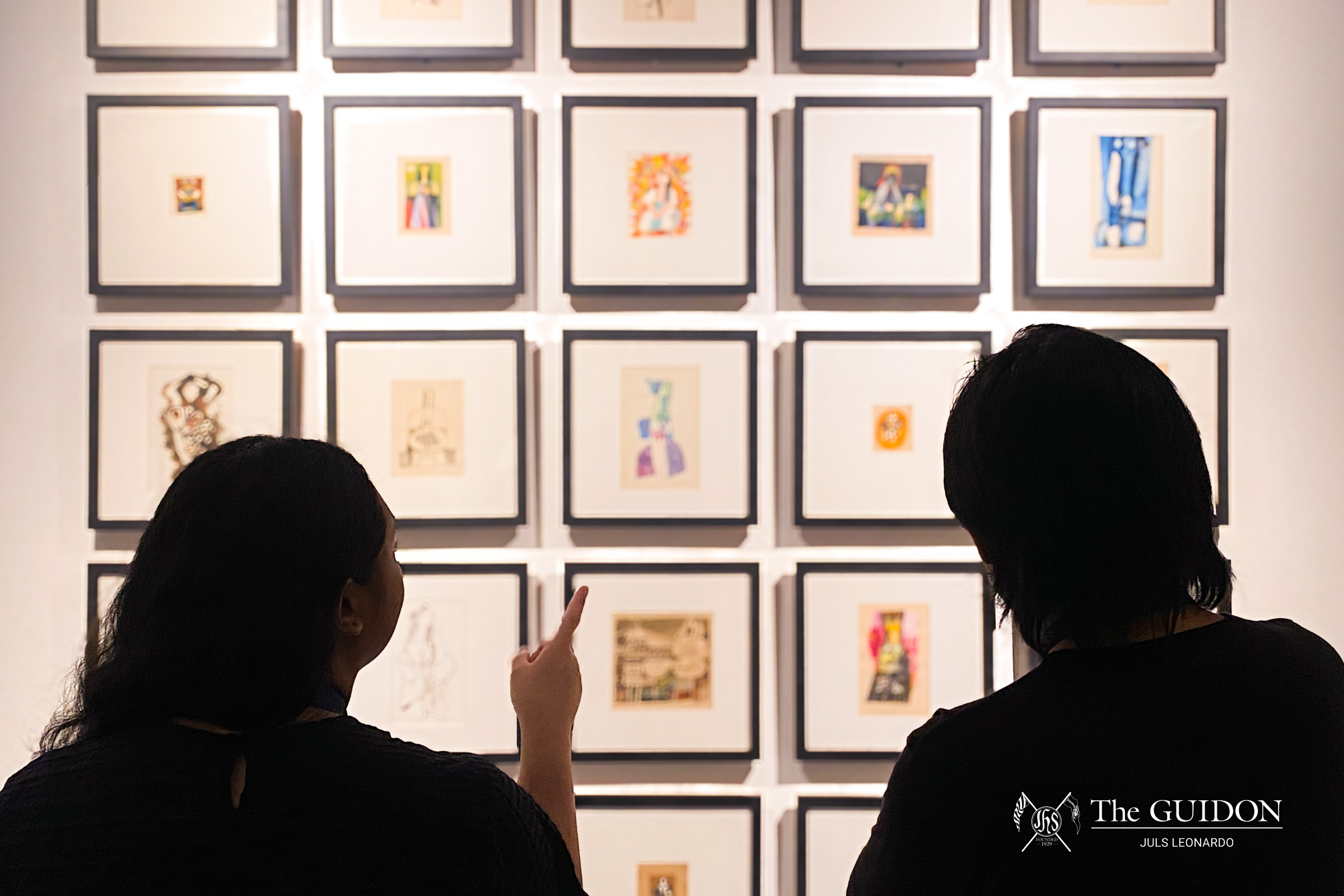
Painting a bigger picture
The students behind Areté make it apparent that there is a vibrant art community in Ateneo, but behind every finished performance, exhibition, or written piece lies an often unseen process filled with experimentation, doubt, and discovery.
While FA courses give endless opportunities for students to explore and create, there are also difficult deadlines and uncomfortable feedback. When it comes to critiques, Gutierrez elaborates that “[Criticism] really does fertilize the creative process. […] There has to be some sort of friction that takes place. But out of friction comes […] some sort of flame, and it reignites the desire to keep learning.”
She further explains how she views her craft as something vulnerable, so when her writing is questioned, she takes it personally. Instead of seeing this as a negative, Gutierrez looks at her feelings of protectiveness as reflective of how deeply she cares about her work, reassuring her that an emotional attachment exists.
Beyond the indigestible constructive criticism, FA students also face the challenge of defending their purpose to non-artists. The common misconceptions Espiritu, Mactal, Gutierrez, and Santinalla have received are remarks that art is easy, impractical, and that there is no value in a formal art education. However, for artists, their work is how they are able to make sense of everything. Gutierrez believes that “we’re all just trying to figure out a way to understand the world,” and for some people, that manifests in creating art.
Espiritu echoes a similar sentiment, “When you go through life, [you] need to keep in touch with what keeps humans soft; to deal with grief, loss, [and art] keeps us in touch with our most basic humanity.”
Creating art can be an extremely personal, intimate thing for artists, even if some people misunderstand and assume that art always has to do something significant. Santillana argues that it should be enough for art to serve as a means of self-expression and to support one’s understanding of life and its intricacies. In her words, “It doesn’t have to do something life-changing to be an important piece of art. It should be allowed to just exist in the world.”
An incoming masterpiece
As these FA students look toward life beyond Ateneo, their paths may diverge—but their relationship with art remains deeply intertwined with the values and spaces that shaped them. In a world where success is often measured by practicality or prestige, their commitment reminds us why creative spaces remain essential. At Ateneo, Areté embodies this role as a creative space—fostering passion, curiosity, and creativity.
Espiritu hopes to embrace her interdisciplinary thinking as a “superpower,” envisioning a future where diverse and surprising voices continue to shape the art world. For her, curiosity and experimentation remain central to artistic practice—she simply wants to be “constantly amused.”
Building on that community-rooted spirit, Mactal aims to champion Filipino theater by creating work that speaks to local audiences rather than replicating Western models. She hopes to bring more accessible theater to people with a distinct Filipino approach and to help strengthen the FA program by emphasizing the importance of intentionality and cultural identity.
Looking beyond personal practice, Gutierrez wants to focus on systemic change, hoping that artists will receive better support and protection and will be less afraid to pursue creative work. She emphasizes the need for policies and systems that allow creatives to thrive while continuously exploring their craft, as the sustainability of art also relies on a community and infrastructure that values and safeguards it.
Meanwhile, Santillana turns inward and highlights the personal and collective value of art, encouraging experimentation and self-expression. “You can just be you, and you can just do what you want to do and make what you want to make,” she asserts. She hopes that the Philippine art scene becomes a space that encourages participation, risk-taking, and creative freedom.
Together, these visions underscore a shared truth: art is both a personal journey and a communal force. Through experimentation, critique, and collaboration, these students have learned not only how to refine their craft but also how to situate it within a larger cultural landscape.
In the hands of these young artists, the future of Filipino art is vibrant, dynamic, and continually evolving—an incoming masterpiece still being crafted with every stroke, word, and performance. What they carry forward is not just a technical skill, but conviction: that art matters, that it deserves space, and that its future will be shaped by those brave enough to keep creating.