
 Hub
Hub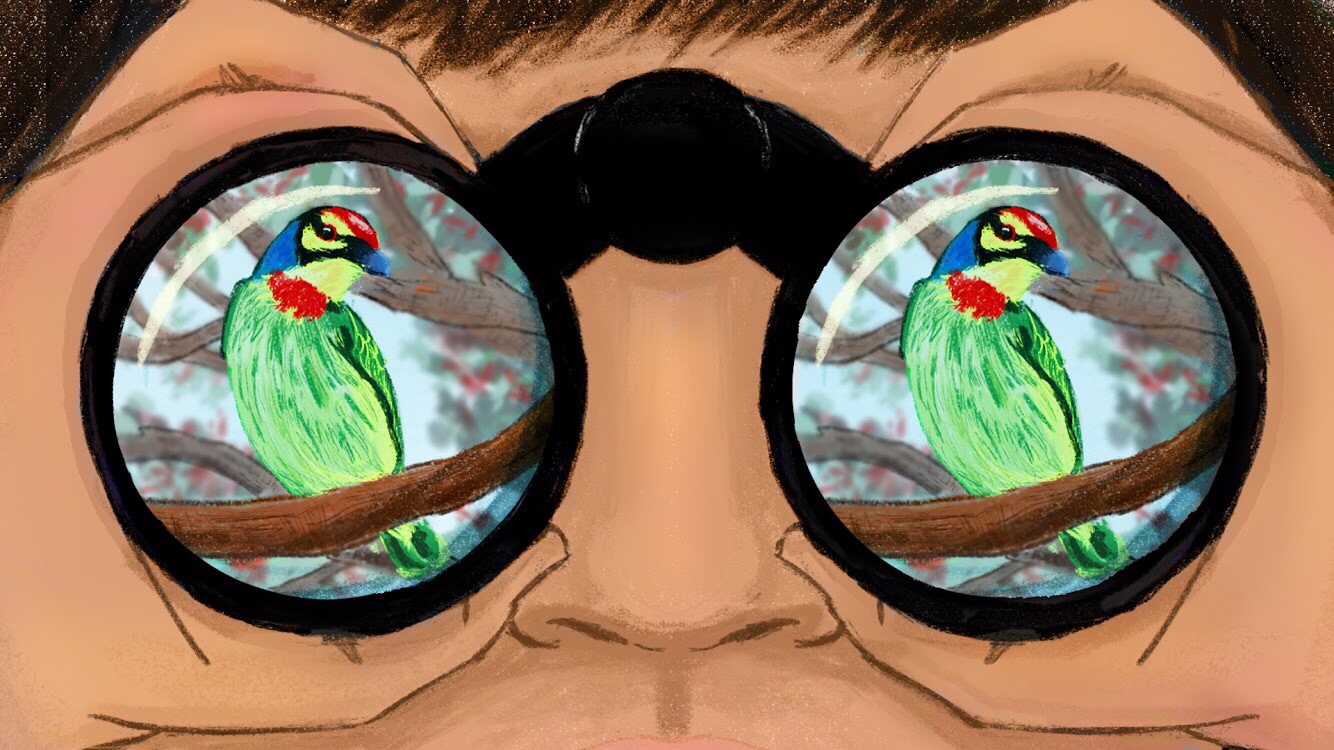


The Ateneo campus is no stranger to wildlife. Immense and covered with trees, it comes as no surprise that the campus embodies biodiversity, being home to a multitude of plant and animal species. Breathtaking bird sightings are not uncommon and peace is found in the greenery around the campus. Yet not many truly realize what we have around us: A unique, thriving ecosystem. Care must be taken to raise awareness about the beauty and diversity of our wildlife and The Ateneo Wild Project does just that.
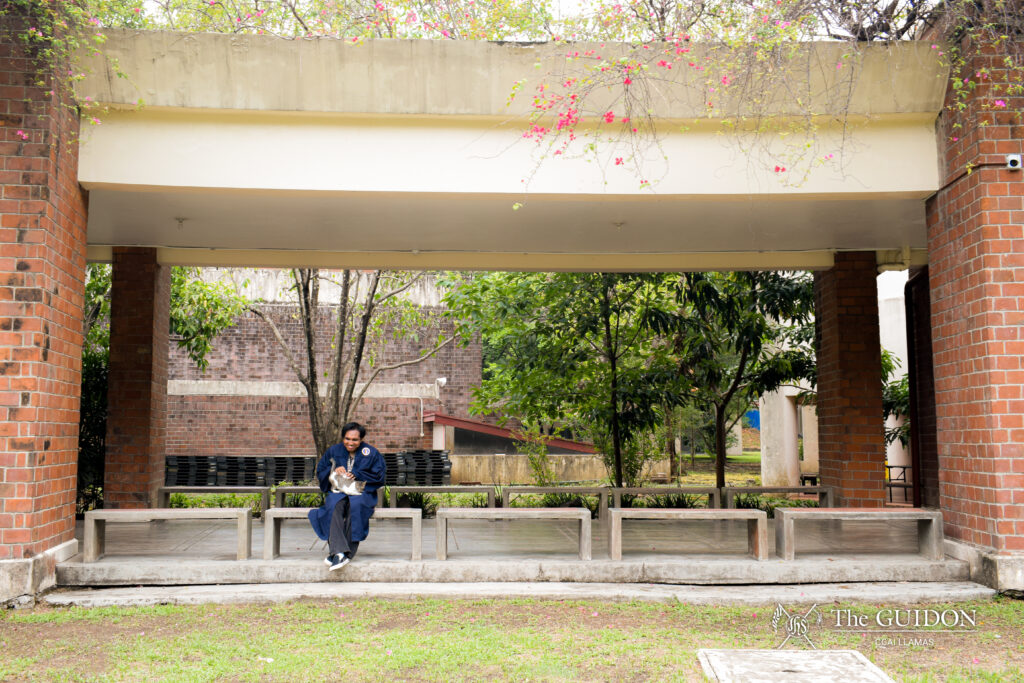
Run by Trinket Canlas, an instructor at the Biology Department, and Abigail Favis, an instructor at the Environmental Science Department and Program Manager for Campus Sustainability at the Ateneo Institute of Sustainability, The Ateneo Wild documents campus biodiversity through its Facebook and Instagram pages by featuring the different forms of life found in the Ateneo. To further raise awareness, the project also organizes nature walks for the Ateneo community to allow students and faculty alike to observe the different species of birds and plants with their own eyes.
More than just a social media page
Canlas, who was already a bird watcher and member of the Wild Bird Club of the Philippines prior to joining Ateneo, began by holding bird walks for the Ateneo community. As interest in the 60 documented bird species on campus grew, she and Favis realized that the campus’ wildlife was something people could get involved in.
Canlas explains that, biologically speaking, Ateneo’s rich biodiversity can be good indicators of the environment’s health. However, she and Favis believe that it is still crucial for the community be mindful of the natural environment around them. “It’s really one of my personal investments to get the inventory,” Favis explains. “When we discuss how the grounds will be used or how [an] area will be developed, there’s something we can say about which areas to leave alone.”
Canlas further explains that Ateneo, being a very closed community, does not have to worry so much about external threats, such as animals being hunted down by the public. However, it is still necessary to set protocols for staff and maintenance to follow in case they find creatures that might cause fear among students (e.g. a bee’s nest or a bayawak).
With The Ateneo Wild Project, Canlas and Favis hope to protect and raise consciousness of the green spaces on campus. “You want to promote this consciousness in people [that] there [is wildlife] around there if you just open your eyes,” Canlas says. “If you don’t know what’s out there, then you don’t appreciate it and you don’t try to keep it.”
Through the project, Favis and Canlas also hope to call attention to the need for native trees on and off campus. Canlas points to a Mahogany tree as she explains that it is a non-native species, meaning it is not very welcoming to local wildlife as nothing eats its fruit or leaves. She then points to the talisay, a native tree. “The fruit of the talisay, the bats like them—they provide for local wildlife,” she adds. “We’re [also] trying to promote the planting of native trees for local wildlife.”
Between the earth and sky
According to Canlas, morning is the best time to watch birds. This is when they are most active, flying around in search for food and water. Birdwatching can also be done in the late afternoons after the heat of the day has gone away. Fortunately, The Ateneo Wild holds nature walks at both times.
For an hour-long nature walk, Canlas and Favis like to begin at SEC Field, where larger birds like the crested myna or even the black-and-yellow black-naped oriole are often found. They then continue to the lower east car park, which is directly across the back entrance of SEC-A. Here, native figs and talisay trees grow, while songbirds flit about, melodiously chirping. In the adjacent field, barred rails (also known as the tikling, from which the tinikling dance was named) are sometimes spotted, hiding in the taller grass.
From there, it’s on to the Loyola School of Theology, where the air is perfumed by the fragrant ylang-ylang blossoms. The tiny Philippine scops owl is said to rest here and has been spotted numerous times. They then proceed to the Manila Observatory grounds (although permission must be asked from the guard first) by passing behind the college swimming pool. This is where the campus’ own Peregrine falcon makes its home from October to March. The falcon was first noticed six years ago, and has returned to the campus every year since then. It perches on top of towers in the field and watches for pigeons to prey on.
The open-aired Manila Observatory field is a good place to end the walk and relax. With the right timing, one might even be treated to a view of the sunset, which, coupled with the birds’ songs and cool breeze, makes for a one-of-a-kind experience that is hard to replicate anywhere else.
Taking a nature walk alone would definitely be a serene experience, but for anyone who would like to go with a group, The Ateneo Wild has many future walks planned out. Canlas and Favis have only held two official nature walks for the Ateneo Community through their Facebook and Instagram pages, but they plan on opening up more slots as interest in their initiative grows. Nature walks can also be organized by messaging The Ateneo Wild as they are more than happy to help out whenever they can.
A shared home
Wildlife preservation is a group effort. Canlas and Favis say that they cannot create a complete record of the campus wildlife on their own. Any wildlife sightings are of great help to the initiative and can be sent to the project’s social media accounts. With the help of these reports from the community, green spaces can be identified and protected from any industrial development in the future. Favis and Canlas plan to develop an even better reporting system to make this easier, and, with all their documentation, hope to inspire the Ateneo community to take better care of its biodiversity.
A solid understanding of Ateneo’s ecosystem is necessary to preserve the diversity of life in the campus and its surrounding areas. With The Ateneo Wild, it is easier to gain this understanding. Canlas and Favis ask Ateneans to stand close enough to the campus’ natural environment to recognize the importance of preserving it, but far enough that its flora and fauna remain undisturbed. “The encounters between humans and the wild should be kept at a minimum,” Canlas says, “but we still want to provide a place for animals to seek refuge.”