
 Theater & Arts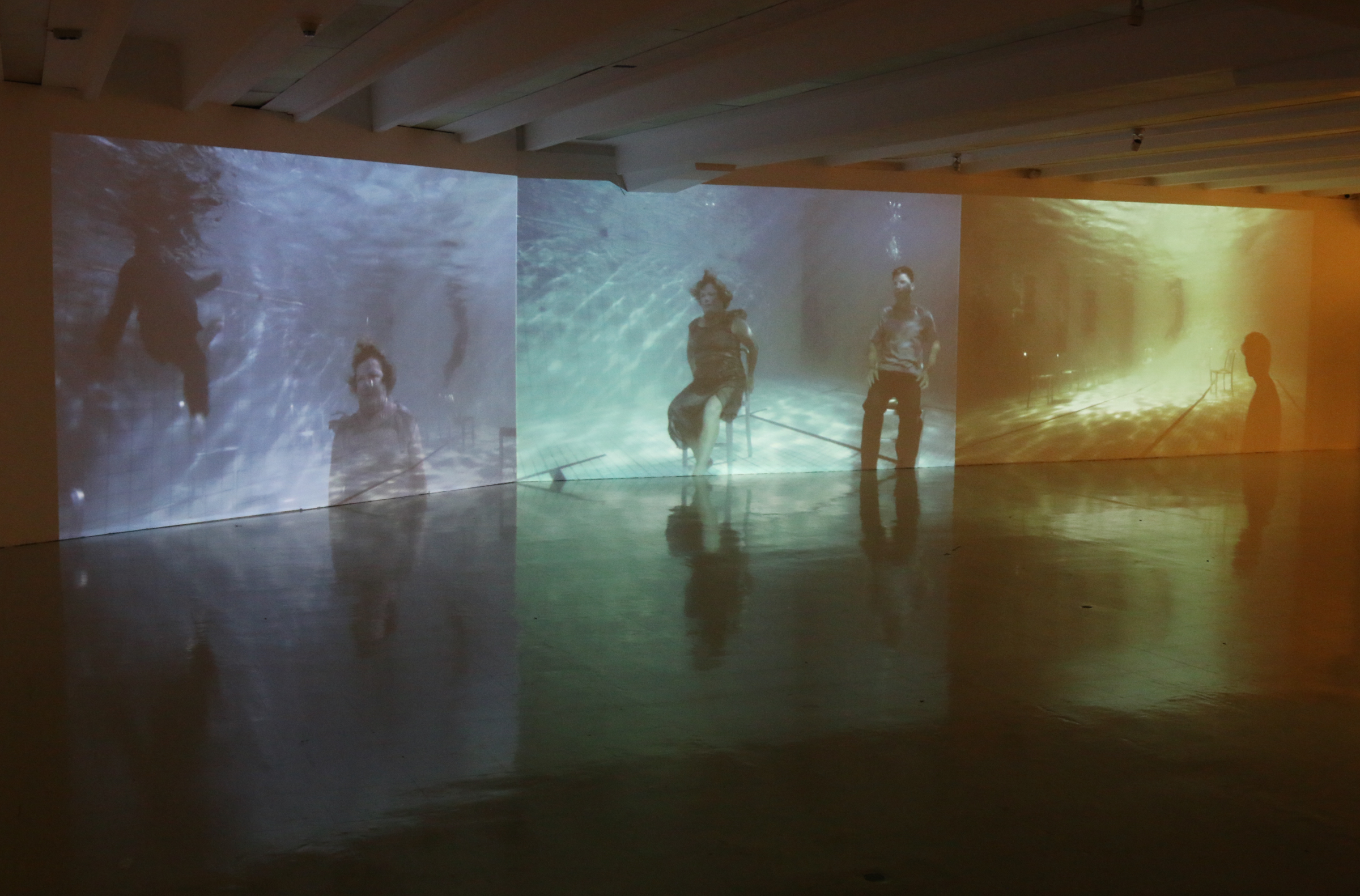
oc·to·roon
ˌäktəˈro͞on/
noun
dated or offensive
- a person who is one-eighth black by descent.
There is a certain power dynamic that comes as a result of the meanings that society attributes to words. A word can incite marginalization and empowerment all at the same time—as is the case with racial slurs and other forms of hate speech. This is the theme that the Ateneo Art Gallery’s new exhibit centers on.
Michael Brennan and Bindi Cole Chocka’s curation sets its sights to take back “octoroon,” a word only used to refer to what indigenous people were allowed to be, as opposed to who they truly were. Through the works of four Australian indigenous artists, the exhibit challenges previous conceptions of indigenous people and the Aboriginal.
The exhibit was opened to the public at the Ateneo Art Gallery on January 25.
Octoroon
“It was simply about trying to shine a light on the fact that identity for everyone is plural and multiple,” Brennan says on the concept of the exhibit. “Perhaps there was a level of expectation in institutions around on what aboriginal art should be,” he says, “I just want to challenge that a little bit, I guess.”
The exhibit came about through Brennan’s observations of existing exhibits in major institutions. “I had a suspicion…there must be other artists who identify as aboriginal but don’t want to talk about that as their main content of their art practice, they want to talk about other aspects of their identity,” he explains. Brennan adds, “If that was the case, why weren’t their voices being heard in exhibitions that major institutions were curating?” Through the Octoroon, Brennan hoped to provide a space for more diverse representations of indigenous people.
Indigenous art
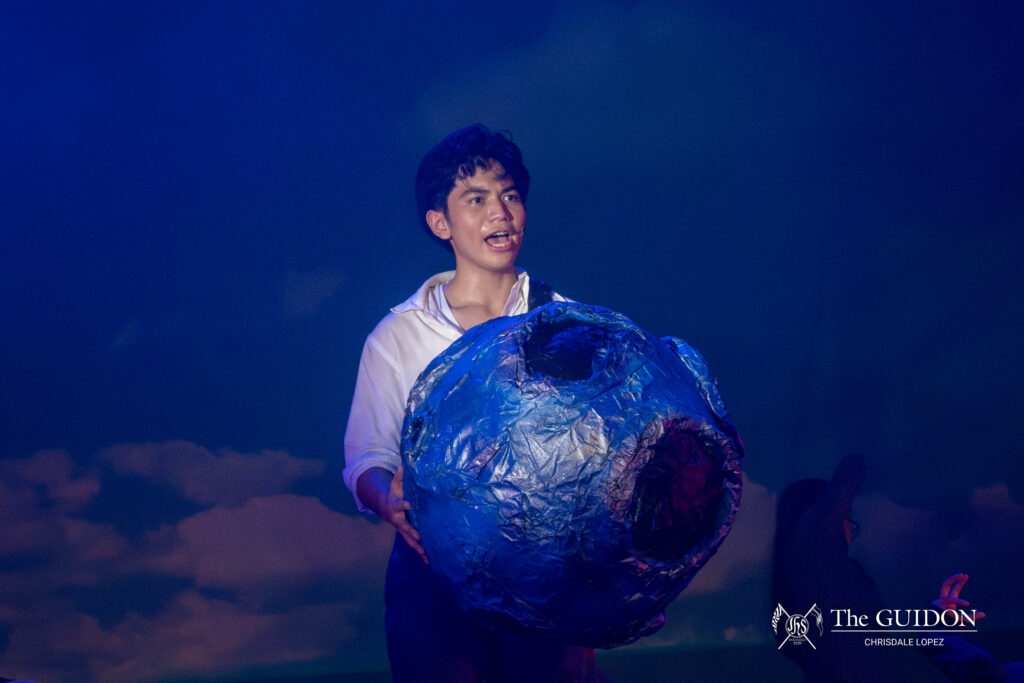
There are three installations that are part of the exhibit. EH5452 by Chocka is a video installation made in 2012. The video shows Chocka reading from a book entitled “EH5452 Diary” in a blue-painted set, with white decorative clouds and black birds by her side. In the video, Chocka recounts her experience in prison and her journey to her faith. “EH5452 aims to turn something dark, hidden, and shameful into something light, revelatory, and beautiful,” Chocka says, as she describes the video online on her Vimeo account.
Steven Rhall’s installation Home Ground is an art installation that uses “found plastic twine, tarpaulin prints, found concrete block, 410 grams La Norenense chorizo en manteca de cerdo tin, 10 ½ Campbell’s cream of mushroom tin, 836 g of Today’s Mixed Fruit tin, 375 g Shanghai Luncheon Meat tin, poured concrete, and wood” as media. The tarpaulin prints depict scenes of everyday life and are pinned down by the weight of the tins tied to them.
Artists Peter Clancy and Helen Pynor work together on The Body is a Big Place, a joint three-channel and single channel video production. The single channel video shows two beating pig hearts connected to a heart perfusion system. The focus of the installation is to talk about organ transplantation, and to show how hearts are able to beat even after the body they used to inhabit is dead. The installation attempts to talk about the line between life and death and how organ transplantation is able to convert death from a moment to a duration.
Parallel to the heart installation is a three-channel video depicting people underwater sitting in chairs. Pynor explains at the Science Gallery in Dublin, where the live installation was previously presented, that the people in the video had experiences with organ transplantation and they used the water as a metaphor for their bodies as well as the relationship between the organ donors and the recipients.
Changing perceptions
More than a successful exhibit, Brennan’s hopes for the installation lie in a newfound understanding of the indigenous people’s identity—both for the audience and the people who identify as such. Beyond its contributions to the art community, Octoroon sheds light on what could have only previously been done by an institution that had monopolized such power in the past.
As Brennan puts it, “If anyone’s going to be defining what their identity is, it shouldn’t be institutions that do it necessarily, but it should be the people at the center of that identity, which is the people themselves.”
 Exposé