
 TV & Film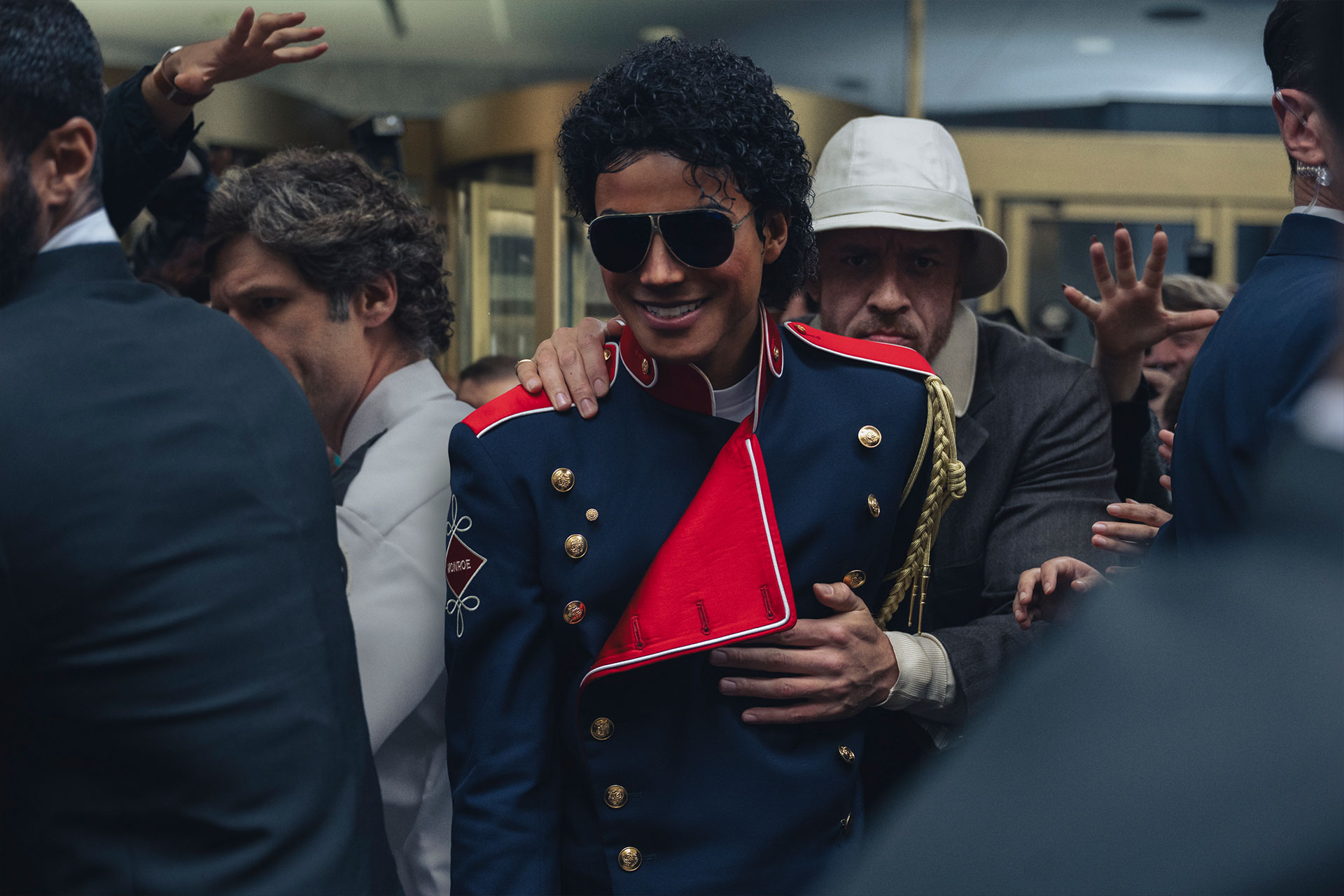
THE KING of Pop gets the biopic treatment that modern celebrity culture always seems to reserve for its most contested icons: expensive, glossy, and terrified of saying anything real. Michael (2026), directed by Antoine Fuqua and produced with the blessing of the Jackson estate, arrives as both a tribute and an image-management exercise. The film wants to monumentalize Michael Jackson while carefully sanding down the mess that made him legible as a person.
Covering his life from Gary, Indiana, to the release of Bad, the film traces the expected arc of a child prodigy. From global superstardom to struggles with abuse and fame, everything is flattened into milestones on a prestige-highlight reel. The piece is handsomely assembled and crowd-pleasing by design. It also feels carefully controlled and pre-sanitized, so that audiences begin to sense subjects it refuses to touch on.
Man in the Mirror
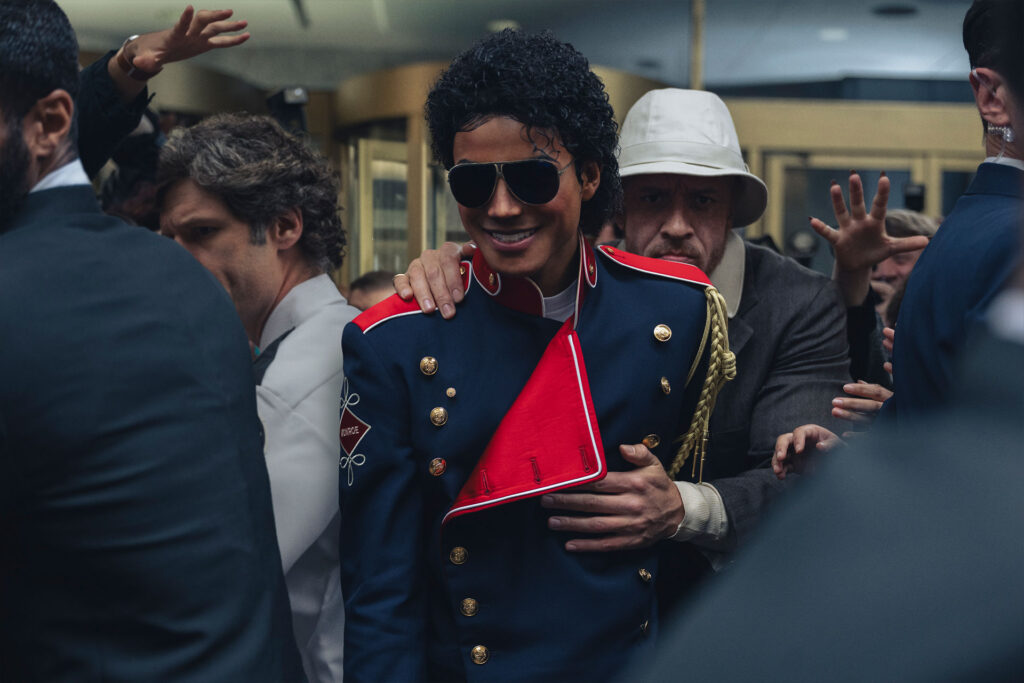
There is one undeniable miracle at the center of the film. Jaafar Jackson, Michael’s nephew who acts as the popstar himself, delivers a physical performance that briefly cuts through the film’s calculated artificiality. He does not merely imitate his uncle’s movements, but understands the grammar behind them: the tension in the shoulders before a spin, the feline pause before a glide, the odd fragility that made even triumph look lonely.
The people watching his performance during Motown 25 did not know that the King of Pop was being made before their eyes. Michael understands this mythology well, and Jaafar sells it with conviction. Whether recreating stage performances or quieter backstage moments, Jafaar captures the contradiction that made Michael magnetic: a body engineered for spectacle, but carrying a spirit that always seemed to recoil from it.
Jaafar also provided vocals during filming, with portions of his voice blended alongside original Michael Jackson recordings to preserve the familiar timbre. Whatever the technical split may be, the illusion works as it gives the film a pulse.
Young actor Juliano Krue Valdi, portraying Michael in his earliest years, is equally impressive in his limited screen time. He locates the sweetness and fear inside a child already being processed into a product.
Smooth Criminal
If the performances strive for complexity, the screenplay has little interest in meeting them there. Michael moves with the rigid chronology of a Wikipedia page translated into screenplay software. Event follows event, album follows album, trauma becomes motivation, and success becomes montage. Conflict arrives only when it can be cleanly resolved or pinned onto an obvious villain.
Colman Domingo, as Joe Jackson, fares best because the film allows him texture through menace. Playing the abusive patriarch who drilled his children into stardom through fear, control, and relentless discipline, Domingo turns each entrance into low-grade horror. Scenes of Joe beating Michael as a child in the name of discipline lent the film some of its only genuinely unsettling moments, portraying the family’s rise less as a dream fulfilled than as something survived. Everyone else is reduced to orbiting functions: executives, lawyers, family members, and friends. They feel less like characters and more like traffic cones guiding viewers toward the next famous song.
This is the central limitation of the modern music biopic. The film mistakes access for honesty, chronology for insight, and iconography for drama. We are shown what happened, repeatedly, but almost never why it mattered.
Thriller (In IMAX)
To the film’s credit, however, it often looks gorgeous. Cinematographer Dion Beebe shot primarily on the Sony VENICE 2, alongside the use of a Canon Scoopic 16mm camera originally popularized for documentary and news gathering work in the 1970s, giving sections of the film a rougher, archival texture meant to evoke the era it recreates. The result is a polished simulation of memory: warm grain, blooming highlights, retro television haze, stage lights rendered with cathedral grandeur. It is a very contemporary kind of nostalgia, digitally precise while pretending to be analog.
There is pleasure in watching an expensive production care about image texture at all. Handheld inserts and faux-newsreel flourishes gesture toward documentary authenticity, even if the film itself remains too guarded to earn that feeling. The visual language says history; the narrative says branding.
The film was heavily marketed around its IMAX presentation, and truthfully, it looks fantastic with or without the massive format. However, even the IMAX framing feels emblematic of the whole enterprise: a supersized spectacle wrapped around something fundamentally flatter than advertised.
Leave Me Alone
What makes Michael frustrating is not its reverence for Michael Jackson, but its lack of curiosity about the cost of becoming him. Jackson was one of the defining figures of twentieth-century pop culture precisely because he embodied contradictions: vulnerability and domination, as well as intimacy and distance. To smooth those tensions away is to misunderstand the source of the fascination.
Some of the film’s omissions become almost surreal. Janet Jackson, one of the most significant figures in the family’s story and a pop icon in her own right, is absent from the film. Her disappearance gives the movie a strange alternate-universe quality, as though the Jackson dynasty existed in a vacuum populated only by people useful to Michael’s narrative.
The film closes by teasing a second chapter, one that would presumably tackle the stranger, darker, and more publicly contested later decades of Jackson’s life. In theory, that sequel could offer the complexity this first installment sidesteps. Still, it is difficult to imagine the follow-up becoming substantially more daring when the Jackson estate financed millions of dollars in reshoots after legal and narrative complications emerged, helping reshape the finished film into its current form. If this chapter was managed so carefully, there is little reason to expect the next one to suddenly grow fearless.
The tragedy is that the music still transcends the machinery built around it. When the songs hit, the movie briefly levitates. You remember what made Michael Jackson singular, what made the world stop. Then the script resumes, and the spell breaks.
Michael is not incompetent. It is polished, watchable, intermittently electric, and anchored by a breakout star turn from Jaafar Jackson. But it is also the safest possible version of a dangerous story, a reverent package about a man whose life still resists packaging. For a figure this immense, that caution feels smaller than failure.