
 TV & Film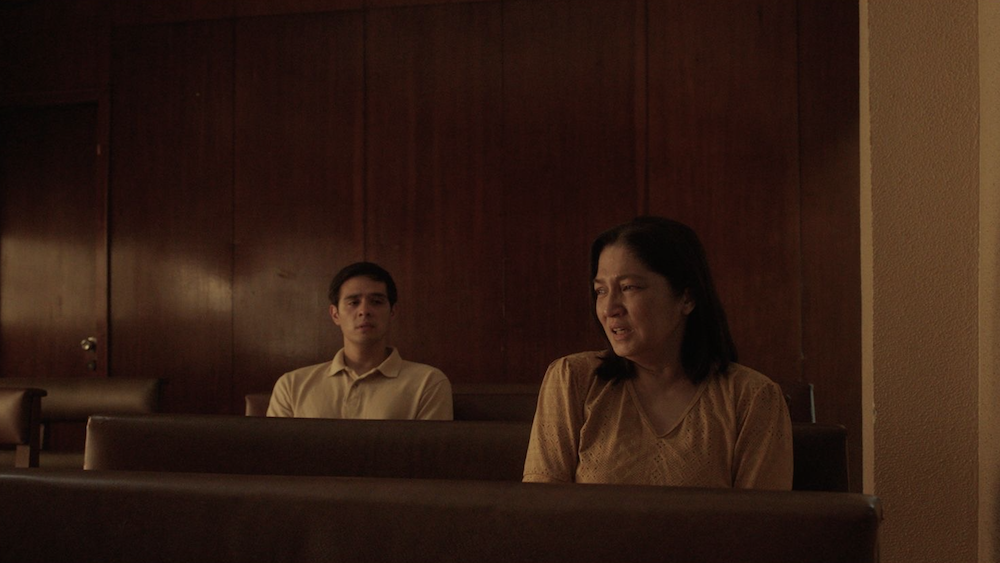
HOW FAR are you willing to go for someone you love? This is the question asked by David R. Corpuz’s Tayo Lang Ang Nakakaalam (2026). Set in the early 2010s, a transitional yet uncertain time for queer couples in the Philippines, the film follows the dependable Neil (Martin del Rosario) as he navigates the pressures of caring for his partner, Bong (Miguel Odron). As Bong remains hospitalized due to an unknown illness, Neil tends to his partner’s needs all while managing his relationship with his partner’s family.
Through melancholic scenes and poignant dialogue, the audience is made grimly aware of the family’s turmoil; yet, we also see a movie burdened by the weight of the themes of trust it conveys.
How we show love
In Tayo Lang Ang Nakakaalam, dialogue and silence go hand in hand. Right from the start, the film forgoes the fluff of title cards and montages, instead dropping us straight into the hospital ward with two of our main characters. Neil and Bong’s mother, Gloria (Yayo Aguila), sit in the quiet, occasionally breaking the silence to talk about life and caring for Bong. This first scene sets the tone for the rest of the movie.
Tayo Lang Ang Nakakaalam is carried by the emotional weight of what is said, unsaid, and done. You feel Neil’s sensitivity in the way del Rosario carries the character; silent yet gentle, expressing his love through action. In non-verbal scenes, we witness the depth of his emotions, thanks to del Rosario’s superb facial acting.
Bong, tragically, is the most expressive character. Though bedridden for most of the film, he remains an emotional core. His tenderness shines when interacting with his family and Neil. We also witness his outbursts, full of both anger and despair. As the film shows us flashbacks of Bong, once spry and full of life, it strikes the audience as a greater tragedy when we see him indisposed by his illness in the present. In just his second acting role, Miguel Odron as Bong is able to depict a man so changed by his condition, yet still capable of warmth in spite of it.
Beyond the couple, the film is also driven by the aching love of Gloria and Benjie (Epy Quizon). As parents of the hospitalized Bong, they do everything to accommodate his needs despite the physical and emotional toll on them.
Yayo Aguila’s characterization of Gloria feels raw; we see her devoted to Bong’s recovery despite her palpable exhaustion. Near the end, her silence erupts into a heart-rending conversation with Neil, as her grief and love overflow in one of the most striking scenes in the film.
Epy Quizon’s Benjie, on the other hand, is distant, coming off years of separation. Driven to make up for lost time with his family, he steps up to finally be the father in their lives, albeit moving in silence due to the emotional distance between them. Benjie may not be as prominent as the other three characters, but he still carries the emotional weight of a father trying to make it right.
A world sanitized
Despite the strong emotional performances on display by our focal family, certain creative and technical decisions hinder the film from reaching its fullest potential.
Pacing was a glaring issue throughout the feature’s runtime. A handful of scenes drag on, with characters simply moving through the space without rhyme or reason. Character-building moments could have filled these sequences, but they remained scarce, thus weakening the narrative’s impact and bloating the runtime of the film.
Furthermore, despite their stellar delivery, the actors still had to contend with some awkward lines of dialogue. This issue of scriptwriting wouldn’t be as big of an issue if the movie wasn’t so heavily reliant on characters talking to each other. At times, conversations felt disjointed that they eroded immersion, especially during critical moments.
Beyond these technical faults, the setting of the film remains puzzling. While it deals with themes that are already heavy, it feels illogical to represent a pre-2015 Philippines in a way that almost makes it too simple for the characters.
The film chooses to gloss over the real problems faced by LGBTQ+ individuals at the time. The year 2012 was turbulent in terms of protections for the community when facing discrimination. Though culturally visible, LGBTQIA+ identities were still fighting to be met with dignity, especially within institutions such as the workforce and healthcare. Yet the movie opts to present the Philippines in a way that ignores these realities.
Bong, after the truth of his illness is revealed, is quickly presented with the resources he needs to fight it. On the other hand, Neil is given utmost grace from his markedly corporate job as his problems get more strenuous. The narrative focuses heavily on the pair’s relationship and family dynamic, at the cost of underdeveloped external context that could have deepened the narrative.
I’m not saying that the characters should have faced atrocious acts of homophobia, but shouldn’t a film grounded in such a specific era also include some aspects faced by the queer individuals of that time? Neglecting to show even part of the struggle slightly hollows the message. Friction between the main characters’ dynamics, along with a reflection of societal views at the time, would have elevated the film’s themes of unconditional love and trust.
These issues lead to the film’s drawn-out final scene that diminishes the emotional highs of the second and third act. The resolution of character arcs is swapped for a robotic, sermon-like conclusion that feels more like an infomercial imploring the viewer to get tested.
It was at this point where it felt as though the film was trying to merge its narrative with its advocacy too rigidly. The almost stoic presentation felt jarring coming off the heels of such a packed third act. While the sentiment is appreciated, it should not have come at the expense of giving our heartbroken family a proper send-off.
Still, the movie ends on a high note, adequately wrapping up our main characters’ arcs and giving the audience just enough room to breathe from the emotional toil of the last few scenes.
Tayo Lang Ang Nakakaalam, while imperfect, succeeds at showing us a family strained by their circumstances but still choosing to love. Through service and care, they transform their lives despite the uncertainty that pervades it.
Standing out as the sole LGBTQIA+ feature in this year’s lineup, the film has to do a lot of heavy lifting to convey its message; and while at times the film feels a bit too strained and on the nose, you can’t help but feel endeared to its earnestness.
Editor’s Note: Cinemalaya 2026 runs from August 16 to 18, 2026, at Ayala Malls Circuit, Makati, and other select malls across Metro Manila. Screening schedules at Ayala Malls Circuit are as follows:
- 2 Valid IDs – August 15, 8:30 PM
- A.NI.MAL – August 14, 11:30 AM
- Ganggang – August 16, 8:30 PM
- Hand of God – August 16, 5:30 PM
- Kaka Sa Yawan – August 16, 2:30 PM
- Mag-Iina – August 15, 5:30 PM
- Shorts Set A – August 15, 11:30 AM
- Shorts Set B – August 15, 2:30 PM
- Status: Rejected – August 15, 2:30 PM
- Tayo Lang Ang Nakakaalam – August 14, 8:30 PM
- Tirik – August 14, 5:30 PM