
 TV & Film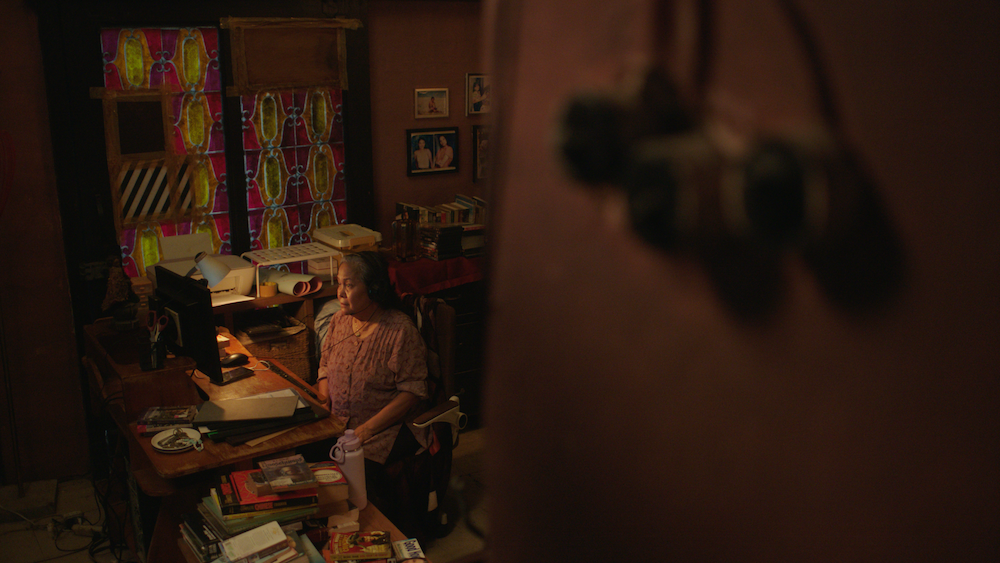
AFTER THE fourth rejection of her US Visa application, Virginia “Biring” Divinagracia (Ruby Ruiz) is faced with a problem: she is cast aside in her children’s fast-paced lives. While her daughter Anna (Alessandra de Rossi) is stretched thin over her duties as a mother and worker, her OFW son Clark faces deportation from America.
As Biring grapples with her old age and her dream to reunite with Clark in America, her hilarious high school acquaintance Tessie (Beverly Salviejo) ropes her into social media and the search for romance. One day, she meets a mysterious stranger online, eventually causing the line between her dream and delusion to blur.
Through Biring’s relationships, Status: Rejected paints a poignant picture of just how far an aging mother can go to avoid the loneliness, exclusion, and dejection of weathering a strained relationship with distant children. It spotlights how a woman, so full of love to give, must also pursue the love that she needs.
Love that forgets
While initial sequences comedically establish Biring’s American dream, it does not shy away from emotional impact, particularly in Biring’s household that relies on her children’s combined income.
Some of Anna’s first appearances in the film show her cooking and earning for the household. But through her indignant attitude and passive-aggressive register, one gets the sense that it’s done out of compulsion before anything else.
Thus, a tension is immediately established in the Divinagracia home. The dialogue presents her more as a burden than a mother through Anna’s oblique jabs, while scenes set in the house feel cinematographically darker and cramped.
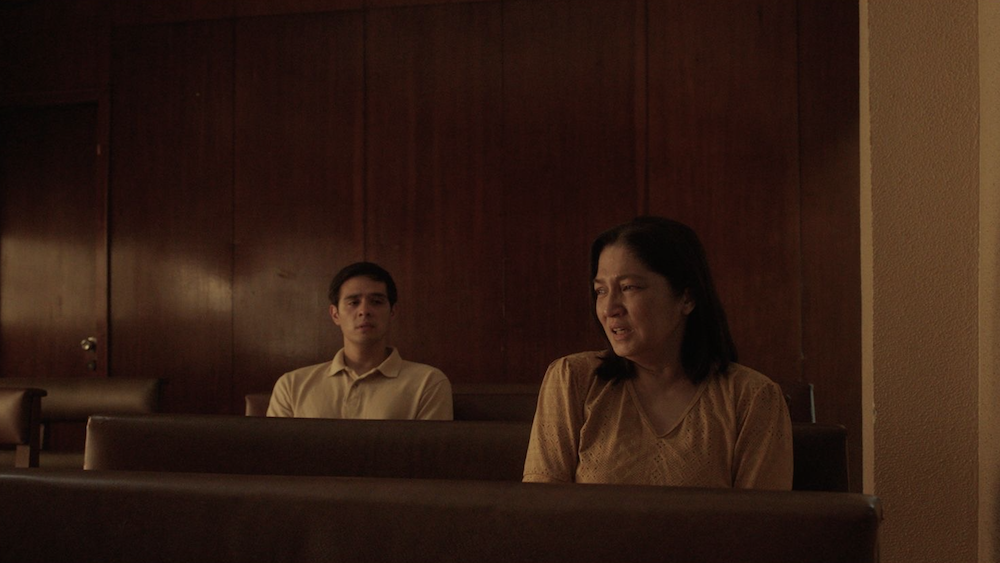
Integral to selling this silent hostility is de Rossi’s cold portrayal of Anna. The sharp glances and curt line deliveries are key to understanding the long-standing friction between mother and daughter. Anna never even speaks to Biring directly, using her daughter, Sophia (Yani Villarosa), as a mediator instead.
Also central to the exhausted family dynamic is Clark, whose presence comes in phone calls bearing news of his imminent deportation. Additional anxiety is placed on the family’s shoulders as his fate is constantly left hanging off-screen, unable to even remit money with his meager pay.
With Clark and Anna so preoccupied with the next bill to pay, Biring is left in an awkward spot where she may be loved, but not overtly. Ruiz portrays this reality in dejected silence and deeper sympathy, shown profoundly by her lowered gazes and quiet submission as she becomes invisible to the children who matter to her most.
The earlier parts of the movie reflect that while provision in cooked meals and monthly allowances are signs of love, it only goes as far as its intention. Sometimes, caught up in the flurry of real-world obligations, love forgets that it is not found in simple responsibilities but in making someone feel cared for.
Love that gives
The at-home animosity catalyzes Biring’s friendship with Tessie, her most relatable figure in terms of age and experience. Tessie introduces her to social media, where she virtually meets Steve, a supposed American veteran. This triggers charming, hysterical sequences where the synergistic duo shop for clothes, discuss flirting, and obsess over this new boy.
As this happens, the film’s dialogue mainly revolves around banter, framing Tessie’s character as a comic relief to an otherwise heavy narrative. Salviejo’s comedic portrayal of Tessie makes her a delight every time she appears on screen. Despite dealing with divorce and loneliness, she remains humorously ribald, which may take depth out of her character at times.
Biring’s online romance flourishes, and her dream to make it to America takes a backseat and is overshadowed by her pseudo-love affair. With Steve, she feels beautiful and worthy of love—a kind of reassurance utterly absent from her children. This marks a thematic shift in the narrative to focus on Biring’s search for validation over the dream to get to America.
Some parts of the film, particularly when the two flirt or Steve makes a lewd request, can feel difficult to sit through because of Biring’s inane gullibility. Before even traveling far to meet him, it’s mostly sad how she gives herself so fully to someone she meets online, mirroring the affection she wishes she could receive from her children.
This blind devotion is further established when Steve tells her that he lacks the funds for his son’s operation, and Biring immediately resolves to give her life savings to him. Even so, the scene unrealistically raises the stakes by removing any kind of nuance on her part. So deprived of love and connection, she jumps at all the chances of giving back to him despite the cost to herself, painting love as giving without looking back.
Love that endures
Reality sets in for Biring when Anna notices Biring’s missing savings and Tessie is revealed to have been calling Steve too. Still, she stubbornly clings to hope when Steve says he’s about to fly to the Philippines. The ending moments of the film presents Biring grasping at straws in the airport, awaiting Steve’s arrival, only for the frustratingly late realization that he was a scam all along.
To an extent, Anna’s resolution felt cramped, as her big epiphany occurs simply with the camera focused on her face. This abruptly cuts her character arc, and audiences are left to interpret the close-up shot by themselves. After receiving a call from Tessie on Biring’s phone, she later reunites with her defeated mother at the airport.
What is arguably one of the most powerful scenes uses silence skillfully, as Biring stares at Anna with profound guilt, only to be met with understanding eyes and a smile for the first time. The suddenness of Anna’s anagnorisis does not take much away from this emotional payoff when finally, Biring is visible to her daughter.
What persists amidst the brisk ending is how love is presented as something so often pursued in fleeting things like a Visa or an online romance, when really, it is much plainer than that. It can simply mean being seen and heard for who you are, by those who matter the most.
Serving as Director Vahn Pascual’s love letter to grandmothers who feel left behind by the world, Status: Rejected is a reminder that the best way to make someone feel loved is to make them feel seen. Even if people tend to go far to feel even a sliver of validation, sometimes the best place to find it is not distant, but in places closer to home.
Editor’s Note: Cinemalaya 2026 runs from August 16 to 18, 2026, at Ayala Malls Circuit, Makati, and other select malls across Metro Manila. Screening schedules at Ayala Malls Circuit are as follows:
- 2 Valid IDs – August 15, 8:30 PM
- A.NI.MAL – August 14, 11:30 AM
- Ganggang – August 16, 8:30 PM
- Hand of God – August 16, 5:30 PM
- Kaka Sa Yawan – August 16, 2:30 PM
- Mag-Iina – August 15, 5:30 PM
- Shorts Set A – August 15, 11:30 AM
- Shorts Set B – August 15, 2:30 PM
- Status: Rejected – August 15, 2:30 PM
- Tayo Lang Ang Nakakaalam – August 14, 8:30 PM
- Tirik – August 14, 5:30 PM