
 TV & Film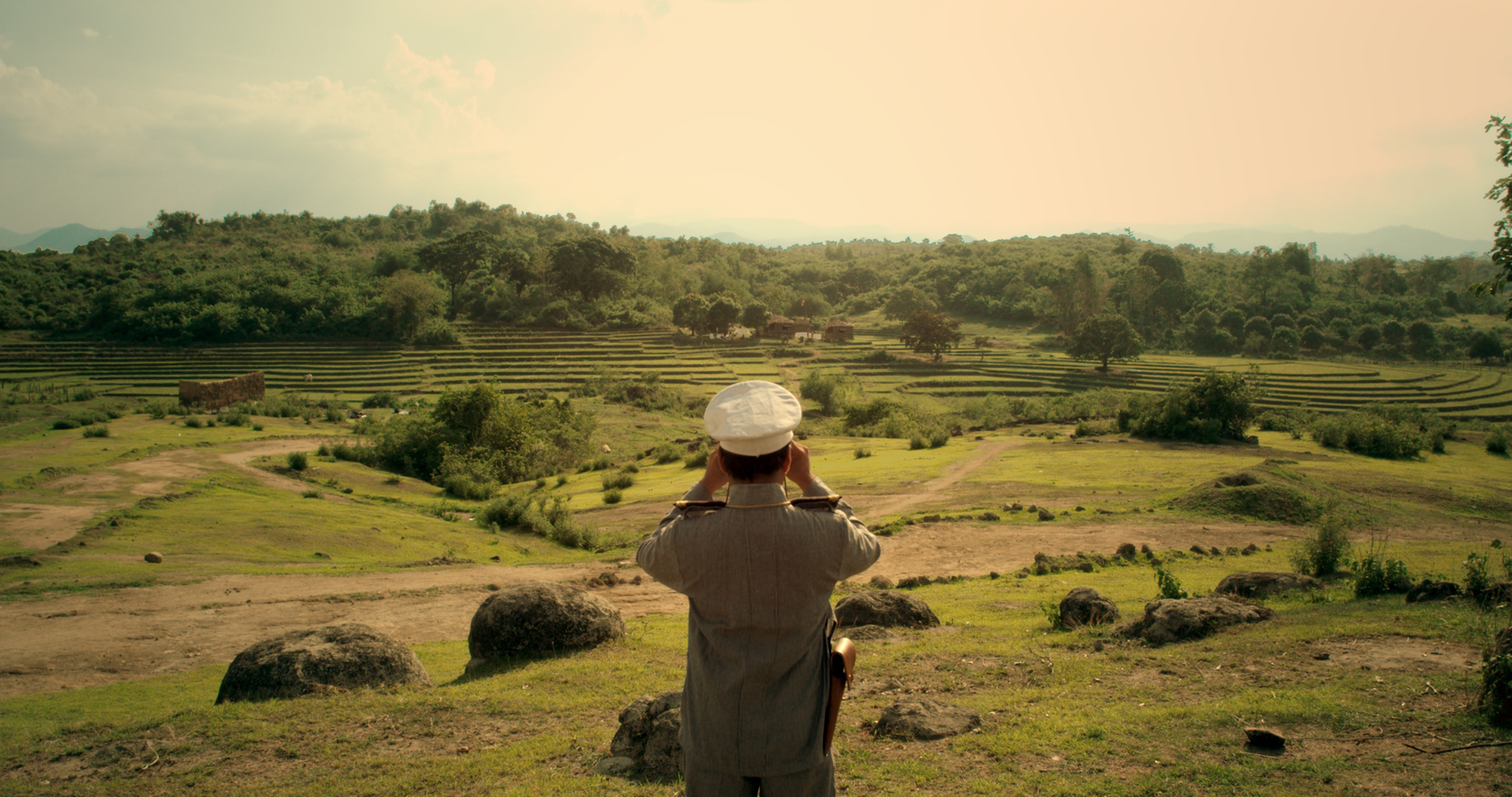
I first caught Heneral Luna in late May, a full three months before it rolled out in theaters nationwide last September. Nothing about it screamed blockbuster. It screened in advance at a hole-in-the-wall indie theater in Greenhills, and it was helmed by Jerrold Tarog, whose last film—the wonderful Sana Dati—was an intimate lo-fi ensemble drama that appealed mostly to the cinephile crowd. Also, it centers on a figure often relegated to the margins in Social Studies classes, behind the Rizals and Bonifacios of our history. People would flock to films about those two; the fortunes of a film about Gen. Antonio Luna—arguably not even the most famous member of his family—were far less certain.
Of course, as the film’s Php 200-million (and counting) take at the box office will tell you, it’s certainly proven to be a hit, and the general consensus is that Heneral Luna deserves every bit of the attention it’s received. Beyond its stellar production value and intelligent dialogue, the film is notable for its unflinching treatment of the titular character, a complex individual who was more Shakespearean anti-hero than virtuous national icon.
Of course, our other national heroes are complex individuals as well; however, most attempts at writing their stories for the screen have been met with lukewarm reception, at best. Rare is the Filipino historical drama that does justice to its subject, and even rarer is one that strikes a cultural chord while doing so. As Heneral Luna has awakened a renewed sense of interest in our country’s history, perhaps it would be good to look back at the different ways we’ve immortalized our heroes on celluloid, and why it took so long for us to arrive at Heneral Luna.
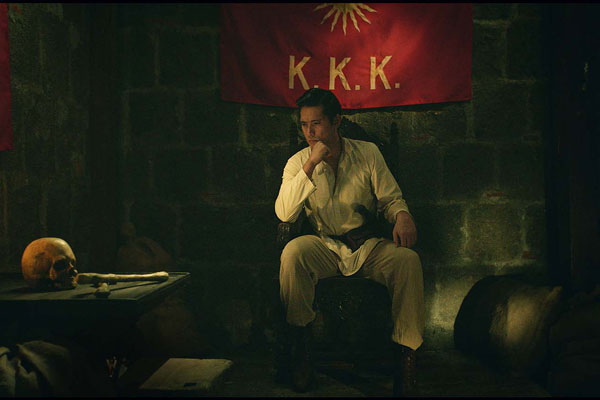
Photo from media.philstar.com
Out of the past
While there were some historical movies that arrived earlier, the idea of adapting our national heroes for the screen really got rolling in the 90s, with experimental director Raymond Red’s Bayani (1992) and Sakay (1993). Both films were semi-biographical retellings of the lives of Katipunan leaders, with the first on Andres Bonifacio and the second on Gen. Macario Sakay. While the two movies garnered recognition in international film festivals, local reception was muted. However, Red had already opened the door for other filmmakers to provide their own interpretations of history.
Unsurprisingly, many of the historical films that followed centered on one of two individuals: Rizal or Bonifacio. Of the two, Rizal proved to be easier to successfully translate to the screen, with several adaptations of his life having won critical praise. One in particular—Marilou Diaz-Abaya’s 1998 film José Rizal—stands out for not only being considered one of the best Filipino historical films ever made, but also one of the best Filipino films, full stop. Chronicling the national hero’s last days at Fort Santiago, the movie essentially cleaned house at that year’s Metro Manila Film Festival, and maintains a stellar 96% rating at Rotten Tomatoes. It also resonated with the general public, raking in a solid Php 96 M at the box office.
Bonifacio, meanwhile, has never really been adapted successfully to the screen. The closest any film has come is 2014’s Bonifacio: Ang Unang Pangulo, but the film, like many other modern Filipino historical interpretations, feels lacking and overtly heavy-handed. Mainly, it suffers from a reluctance to portray its protagonist as the flawed, complex individual he was—a reluctance common in local historical biopics. Even in other examples, such as the 2012 Emilio Aguinaldo biopic El Presidente, this insistence of the central hero as a flawlessly good person results in characterizations that come off as incomplete and contrived.
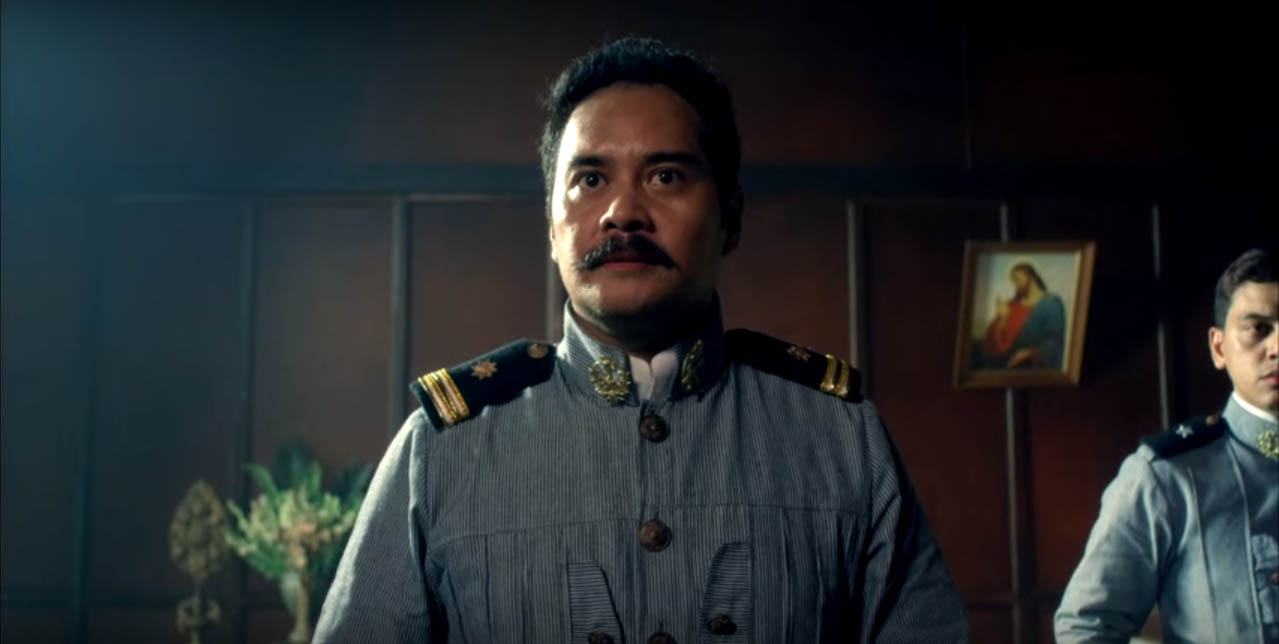
Photo from 2.bp.blogspot.com
On Luna
By comparison, Heneral Luna holds no such pretenses. Luna, as played impeccably by John Arcilla, is portrayed as a terribly flawed individual: Hot-tempered, tactless, and teeming with hubris. He is often reckless in his methods, and some of his actions border on being needlessly abusive and exceedingly petty. However, he is also undeniably patriotic, passionate, and intelligent. In short, he is the sort of complex character Filipino historical dramas have been sorely missing. Antonio Luna is a great hero, yes, but as the film goes out of its way to say, that does not necessarily mean he’s a great role model.
Perhaps it is this fresh perspective on heroism that has drawn people to the film. Unlike many of its predecessors, Heneral Luna is concerned first and foremost with telling an effective story. Jerrold Tarog is one of the country’s premier cinematic storytellers, and the film’s long-gestating screenplay—it had been floating around for more than twenty years before the director picked it up—goes out of its way to paint Luna as a person first and an icon second. He is a murky figure, filled with contradictions and ambiguities.
It was this ambiguity that gave me pause as I exited the theater that day. Any fan of cinema could see the film was excellent; the question was whether its excellence would matter to an audience that’s never taken to anti-heroes. Four months later, the numbers show that there is an audience for the sort of character-driven drama Heneral Luna runs on, and with two Tarog-helmed follow-ups—one on Gen. Gregorio del Pilar and the other on Pres. Manuel Quezon—on the horizon, there are more to come. While it may not represent a massive shift in the way local films are done, it has set the bar much higher for Filipino historical cinema. Now, it is up to the rest of the industry to respond accordingly.